


 By Juliana Octavini
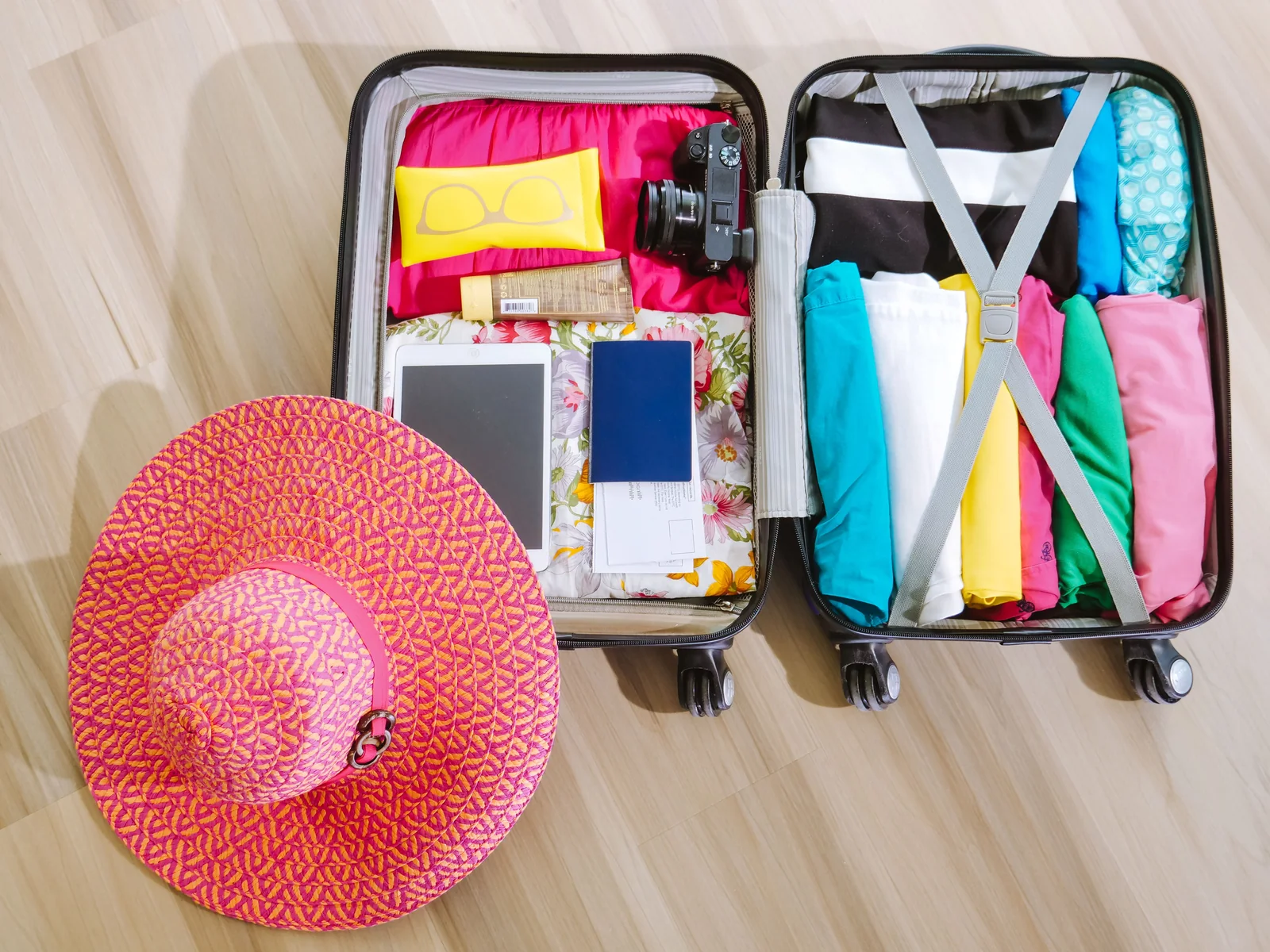
Packing for a trip to the United States seems simple. You pick out your clothes, organize your electronics, choose your shoes, leave some room for purchases on the way home, and you're done. Or almost.
Between what you'd like to bring and what you can actually take on a plane, there are rules that aren't always obvious. Some of them changed in 2026.
Did you know, for example, that a power bank may be allowed in the cabin but prohibited in checked luggage? That a 1.5-liter Stanley bottle can go through security without a problem as long as it's empty? Or that food bought at a Brazilian grocery store can be stopped by U.S. Customs even if it's sealed?
There's another detail: the airline doesn't make all these rules. Brazil's National Civil Aviation Agency (Anac), the TSA, U.S. customs authorities, and Brazil's Federal Revenue Service each have different responsibilities. Something one authority permits won't necessarily be accepted by another.
For travelers headed to Orlando, especially those with a connection in the United States and plans to come home with a few extra shopping bags, understanding these differences can prevent unexpected costs, confiscated items, and airport hassles.
The good news is that packing doesn't have to be complicated. The key is knowing which rules apply at each stage of your trip, what actually changed, and what deserves a second look before you zip up your suitcase.
Who sets the luggage rules for travel to the United States?
Before you decide what goes in each bag, it's important to know who sets the rules. After all, something one authority permits may not be accepted by another.
| Authority | Responsibility |
|---|---|
| Anac (Brazil) | Passenger rights and regulation of Brazilian air travel |
| Airline | Bag dimensions, allowances, fares, and carriage conditions |
| TSA (United States) | Security screening at U.S. airports |
| CBP and USDA (United States) | Customs and agricultural inspections upon entry |
| Brazil's Federal Revenue Service | Duty-free allowances, taxes, and rules for goods brought from abroad |
That distinction clears up many common questions.
For example, an airline may accept a suitcase containing certain foods, but that doesn't mean those foods are allowed into the United States.
Likewise, clearing TSA screening on your way home doesn't automatically exempt your purchases from taxes in Brazil.
My advice is to check with the authority responsible for the issue instead of relying only on information you find on social media.
Carry-on and checked luggage: What are the weight and size limits?
One of the first questions people have when buying a ticket to the United States is how many bags they can bring.
The answer depends on the fare you bought, the airline, and the flights on your itinerary.
Carry-on luggage: Does the 10 kg minimum still apply?
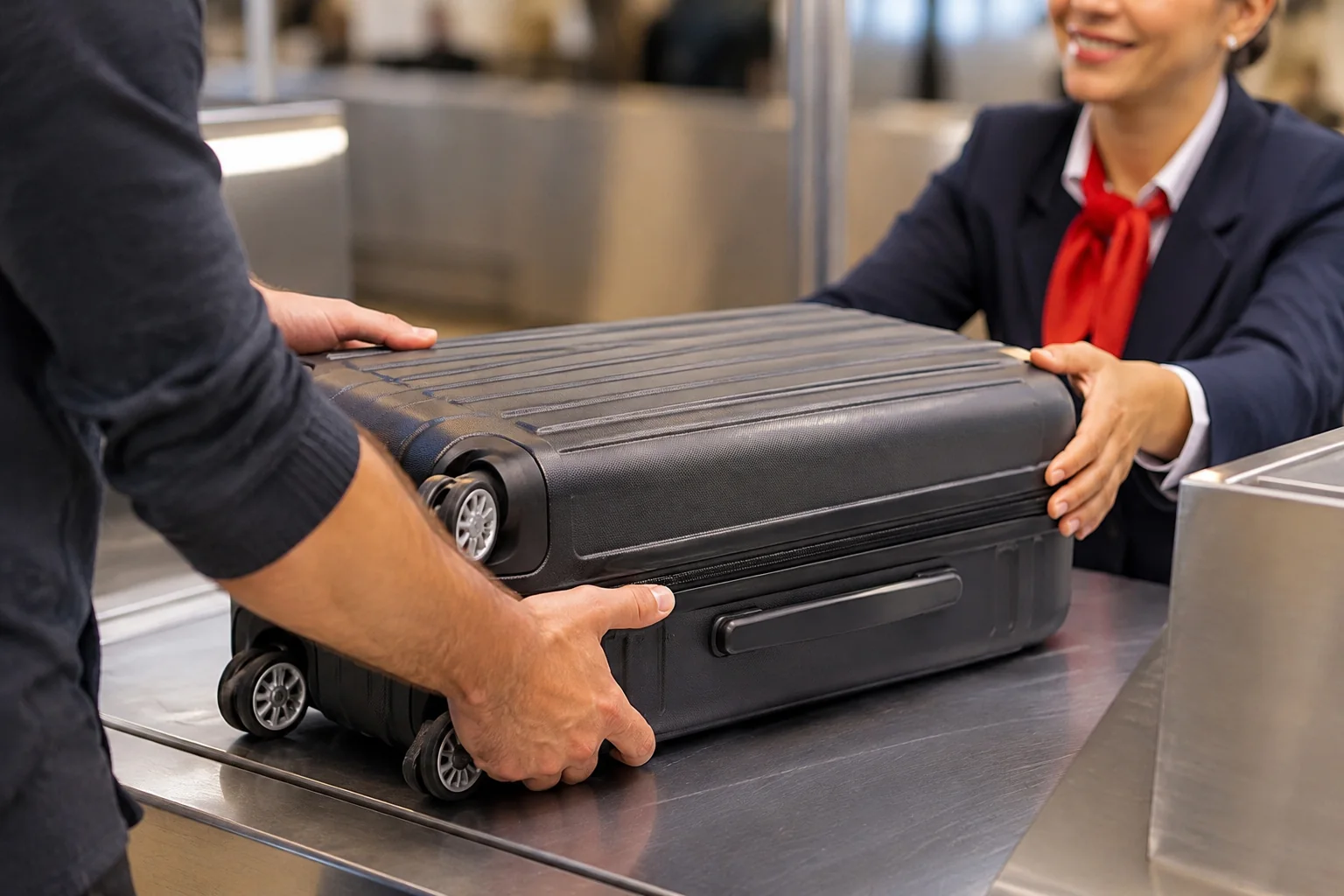
Anac Resolution No. 400 establishes a minimum free carry-on allowance of 10 kg for flights covered by Brazilian regulations, subject to the carrier's size limits and safety restrictions.
The most common dimensions on Brazilian airlines are 55 × 35 × 25 cm, including wheels, handles, and outside pockets. But don't assume those measurements apply everywhere.
On U.S. airlines, for example, a limit of about 56 × 36 × 23 cm (22 × 14 × 9 inches) is common, although the rules vary by airline.
Another important detail is the personal item, usually a small backpack or purse that fits under the seat in front of you. Check your fare rules to see whether a personal item is included and what size it can be.
What if the airline asks you to check your carry-on at the gate?
That can happen when overhead bins are full or because of operational limits on the aircraft.
If it does, take out your medications, documents, valuables, and, most importantly, spare lithium batteries and power banks first.
I would keep those items organized in a small backpack so I wouldn't have to open my suitcase in the middle of the boarding line.
Checked luggage: Are 23 kg and 158 cm the standard limits?
On many international flights, the traditional allowance is 23 kg per bag, with a maximum linear size of 158 cm, calculated by adding the height, width, and depth.
That doesn't mean every ticket includes a checked bag, though.
Some fares include one or more bags. Others charge separately for checked luggage, even on international flights.
This is where a ticket that looks cheap at first can turn out to be a poor deal.
Imagine two options: one ticket costs R$400 less but doesn't include a checked bag; the other already includes a 23 kg bag. Depending on the fee to add luggage, the second ticket could be the better choice.
The same thinking applies to overweight baggage, which can come with steep fees.
I suggest comparing the final price of a ticket with all the bags you'll need, not just the starting fare in the ad.
What happens when your flight connects in the United States?
This deserves special attention from Brazilians traveling to Orlando.
Imagine flying out of Guarulhos, arriving in Miami, and continuing to Tampa or Orlando.
If Miami is your first point of entry into the United States, that's normally where you'll go through immigration, collect your checked luggage, and complete customs procedures before handing the bag back over for your connection, according to the airline's instructions.
You'll also need to go through another security screening to reach your next flight.
That means a drink you bought before boarding in Brazil, for example, could become a problem at the next checkpoint if it doesn't qualify for an applicable exception.
Your baggage allowance is another consideration: when flights are booked on separate tickets, the rules and fees may differ.
Before you travel, confirm whether your bags will be tagged to your final destination and how the connection will work.
What should go in your carry-on, and what belongs in a checked bag?
An easy way to organize your bags is to think in three categories: essentials, items subject to security restrictions, and things that need more space.
| Carry-on bag or personal item | Checked bag |
|---|---|
| Passport, documents, and cards | Clothes and shoes |
| Medications needed during the trip | Shampoo and cosmetics in large containers |
| Phone, laptop, and camera | Sharp objects permitted in checked luggage |
| Power banks and spare batteries | Permitted bulky items |
| Chargers and cables | Souvenirs and purchases |
| A change of clothes | Permitted liquids, properly packed |
This is a practical guide, not blanket permission: some items are prohibited in both types of luggage, and others are subject to specific limits.
Fragile or valuable items need special attention. Keep them with you whenever possible.
It's also worth packing a change of clothes in your carry-on. If your checked bag is delayed, at least you'll have what you need for the first day.
Power banks on planes: What changed in 2026?
Portable chargers became subject to new restrictions in 2026, and this part of the article deserves particular attention.
Guidance released by Brazil's Ministry of Ports and Airports, Anac, and the Brazilian airline industry set clearer limits on the number and capacity of power banks and where they must be kept during a flight.
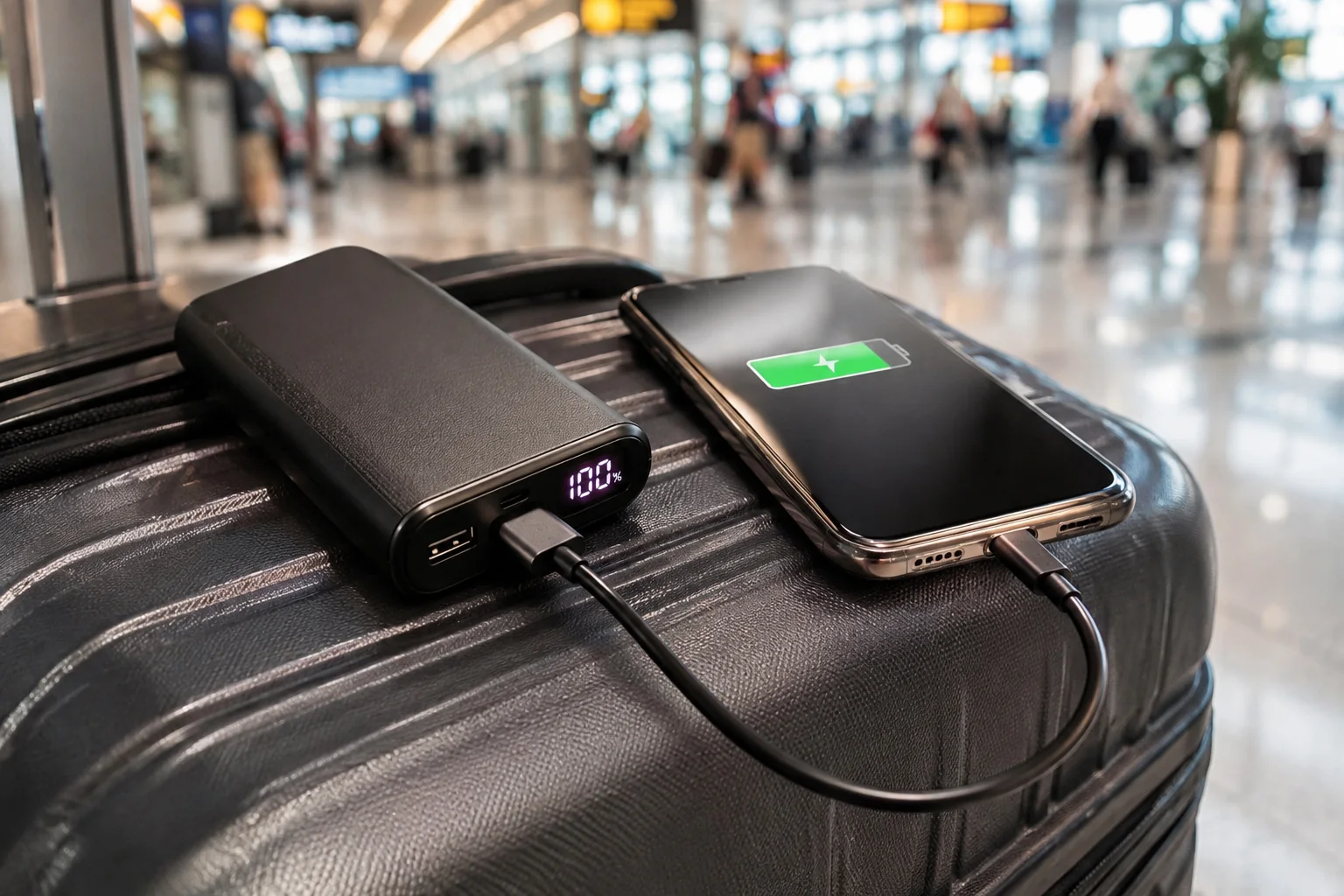
The main requirements announced for flights covered by the new measures are:
- No more than two power banks per passenger, each with a capacity of up to 100 Wh.
- Devices between 100 Wh and 160 Wh require airline approval.
- Devices over 160 Wh cannot be transported.
- Power banks cannot go in checked luggage.
- They must stay in your personal item, under the seat, or in the seat pocket, not in an overhead bin.
- They must not be used or recharged during the flight, in accordance with the applicable restrictions.
For safety, protect them from damage and short circuits, preferably by keeping each one in its own compartment or case.
You can find the details in the official notice on transporting power banks.
How can you tell whether your power bank can fly?
The limit is measured in watt-hours (Wh), not just the milliampere-hours (mAh) advertised on the device.
The formula is:
\[ Wh=\frac{mAh\times V}{1000} \]
For a battery with a nominal voltage of 3.7 V:
| Capacity | Approximate energy |
|---|---|
| 10,000 mAh | 37 Wh |
| 20,000 mAh | 74 Wh |
| 26,800 mAh | 99.2 Wh |
| 30,000 mAh | 111 Wh |
| 50,000 mAh | 185 Wh |
Note: These calculations are examples. Check the label or the manufacturer's specifications for the actual voltage.
For a full day at the Orlando parks, a 20,000 mAh charger can be a practical choice, provided it meets the airline's requirements.
It's also important to check the rules for your return flight. The FAA, the U.S. aviation authority, has its own battery rules, and airlines may impose additional restrictions. The two-power-bank limit announced for covered Brazilian operations should not be presented as a universal rule for all U.S. flights.
Before you travel, consult the FAA's official guide to lithium batteries.
Stanley bottles, liquids, and cosmetics: What can pass through security?
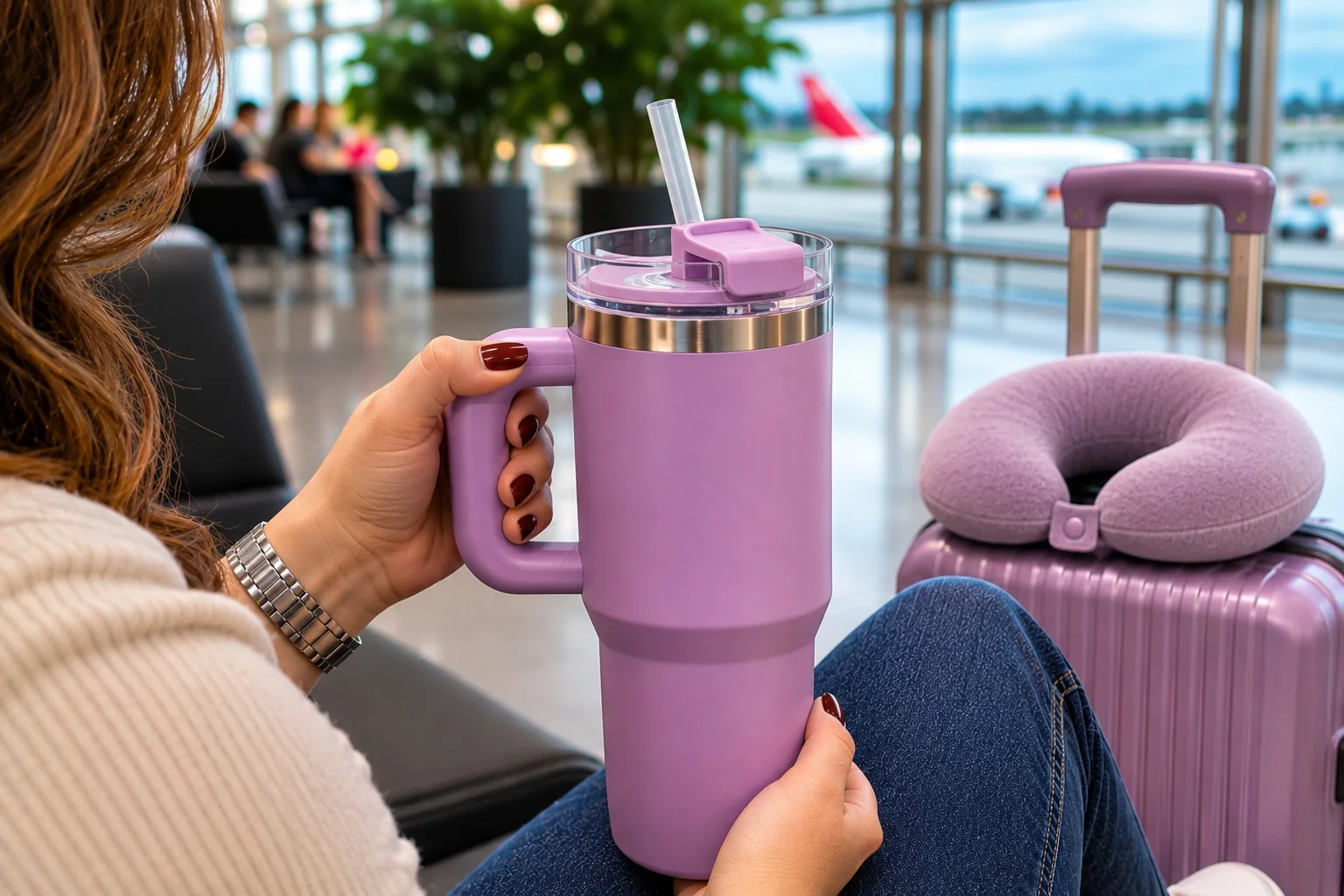
Can you take a 1-liter or 1.5-liter insulated bottle into the cabin? Yes. The issue isn't necessarily the size of the container; it's the liquid inside it.
Can I take a Stanley bottle in my carry-on?
Generally, yes, as long as it's empty when you go through security.
After you clear the checkpoint, you can fill it at a drinking fountain or water station, if one is available.
That's especially useful if you're traveling with children or like to keep water close at hand during the flight.
But remember: if you have a connection that requires another security screening, you may have to empty the bottle again.
I'd bring an empty reusable bottle instead of buying several bottles of water during the trip. It's handy on the plane and while you're out exploring.
What is the carry-on limit for liquids?
Under standard security procedures for international flights, liquids, gels, creams, pastes, and aerosols must each be in a container of no more than 100 ml.
Those containers must fit in one clear, resealable plastic bag with a maximum capacity of one liter per passenger.
In the United States, the TSA calls this the 3-1-1 rule: 3.4 ounces per container, one approximately quart-size bag, and one bag per passenger.
The limit is based on the container's capacity, not just how much product is left inside.
So a 200 ml tube of sunscreen with only a little product remaining may still be rejected.
The rule also covers products many people forget count as liquids, such as toothpaste, hair gel, cream makeup, and spreadable foods.
There are exceptions for liquid medications, infant formula, breast milk, and certain foods needed during the trip, subject to additional screening.
For departures from Brazil, official guidance on the clear bag is available in the carry-on security guide.
What about perfume bought at a duty-free store?
Liquids bought at duty-free stores may be treated differently, especially when they come in sealed security bags with proof of purchase.
Still, don't assume any duty-free shopping bag will be accepted on every connection.
If you go through another security screening, particularly in another country or airport, additional conditions may apply.
Before buying perfume or drinks in large bottles, tell the salesperson about your connection and confirm the rules for your entire itinerary.
Traveling to the United States with medication: Prescriptions, packaging, and precautions
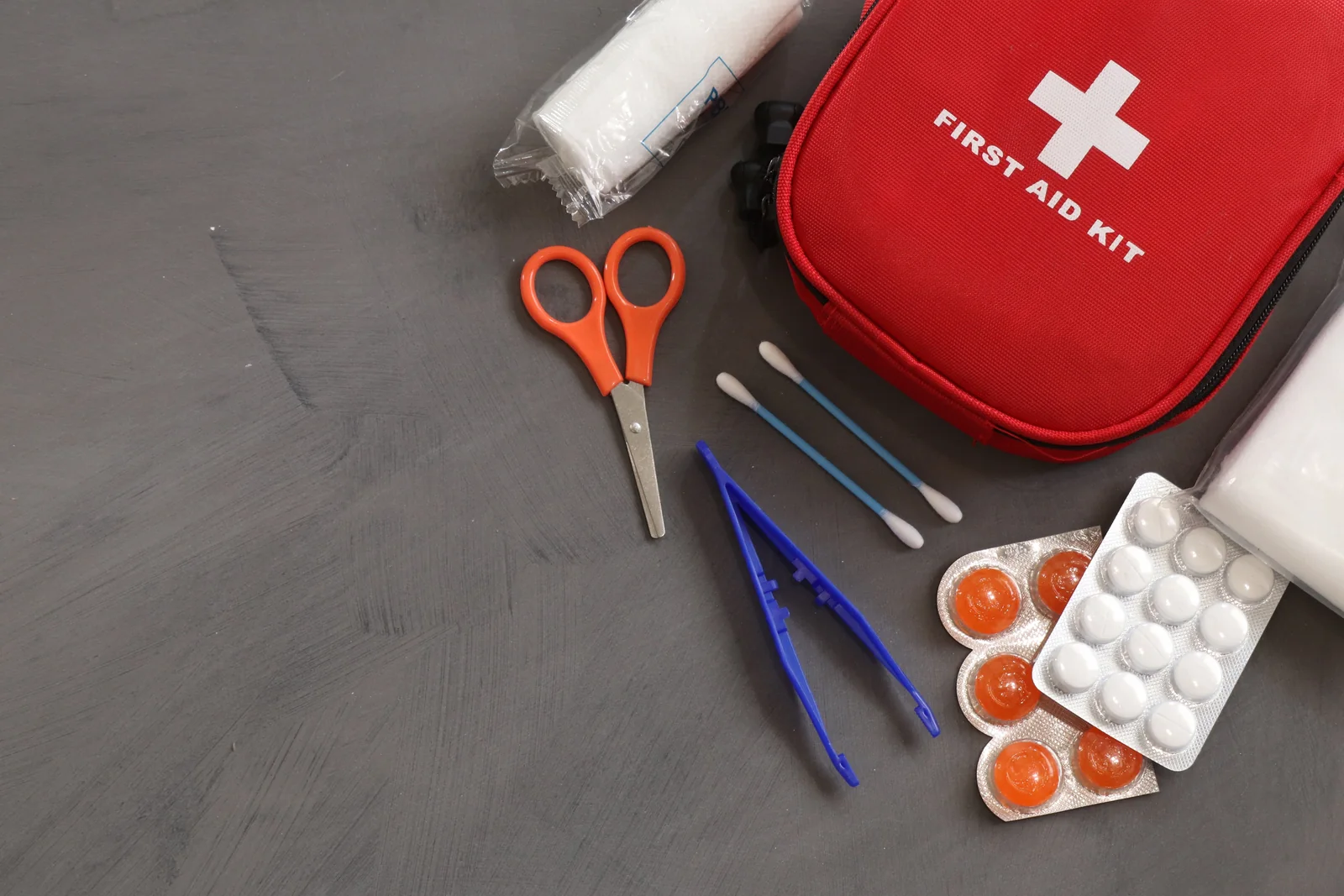
Medication is one thing I would never leave exclusively in a checked bag.
That's not only because the bag could be delayed or lost. Some treatments must be taken on a schedule, and you may need them during the flight.
Start by setting aside enough for your trip, plus a reasonable amount for possible delays, while following U.S. entry requirements.
CBP advises travelers to declare medications when required and recommends original packaging and the corresponding medical documents. It uses a supply of up to 90 days as a general guideline. That is not automatic permission to bring in any substance.
Do I need an English translation of my prescription?
For prescription drugs, especially controlled substances, the safest approach is to bring a prescription or doctor's letter in English stating the patient's name, the active ingredient, the dose, and the reason for use.
Not every medication formally requires a certified translation. Requirements vary by substance and by the authority involved.
Common medications in small amounts for personal use usually cause fewer difficulties, but you should still check the rules.
Another important point: a medicine legally sold in Brazil might not be permitted in the United States or may contain an ingredient subject to special controls.
If you take medication regularly, talk to your doctor before the trip and check U.S. requirements.
Can I bring just the blister packs without the box?
Although TSA security screening does not necessarily require the original retail box for every medication, U.S. customs authorities recommend keeping medicines identified and accompanied by appropriate documentation.
It's safest to keep the original packaging whenever possible.
If the box is too large, one practical option is to fold it and pack it with the blister packs and prescription, as long as the medication remains clearly identifiable.
I wouldn't put pills from different medications in unlabeled containers.
What about liquid medications or syrups over 100 ml?
Liquid medications needed during travel may qualify for exceptions to the usual 100 ml limit, subject to security screening.
Ideally, keep them separate from your other liquids and tell the security officer about them.
Take the same precautions with children's medicines: labeled packaging, documents on hand, and an amount that matches the need.
Can I bring food from Brazil into the United States?
This question deserves special attention because carrying food on the plane and bringing it into the United States are two different things.
An airline may allow a food item on board, while U.S. agricultural or customs authorities may still prohibit it from entering the country.
The basic rule is to declare any food or agricultural products you're carrying when you enter the United States, whether they're in your carry-on or checked luggage.
CBP requires travelers to declare these products, including when they use electronic entry procedures.
Which foods tend to cause problems?
Products subject to significant restrictions include meat and meat products, cured meats, fresh fruits and vegetables, seeds, plants, and certain animal products.
Examples that deserve extra caution include sausage, salami, ham, dried meat, and prepared foods containing meat.
Whether an item can enter depends on its origin, ingredients, and current agricultural health restrictions.
Being sealed or commercially packaged does not guarantee that an item will be admitted.
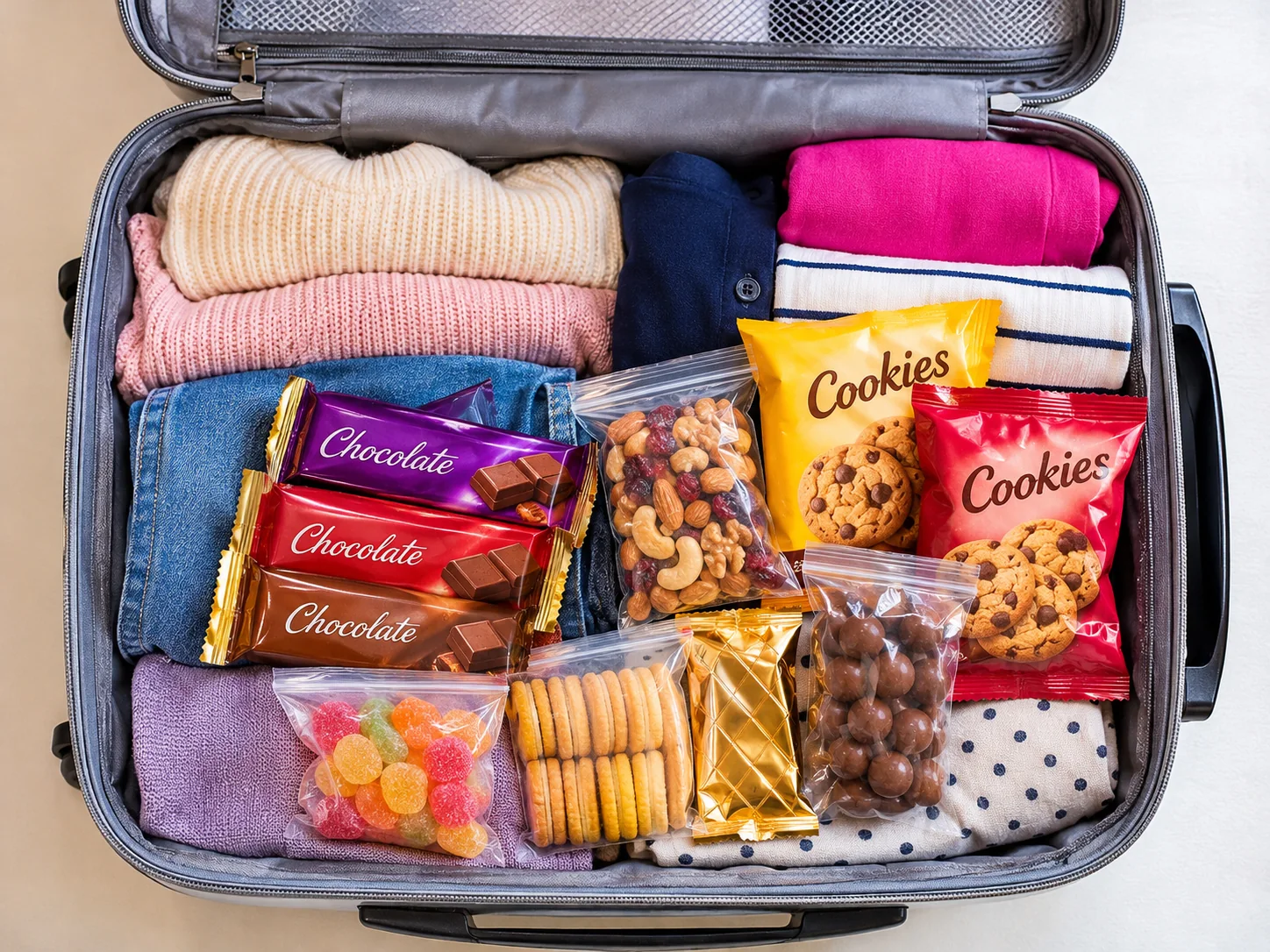
Are chocolate, coffee, cookies, and cassava flour allowed?
Many commercially packaged products, such as chocolate, coffee, and cookies without restricted ingredients, are commonly admitted for personal use.
But the decision also depends on the ingredients and where the product comes from.
That's why I wouldn't promise that any particular food will always be allowed into the United States.
The safest approach is to keep the original packaging, check the ingredients, and declare the item.
CBP explains which foods can enter the United States and outlines the main restrictions.
What happens if I don't declare food?
Travelers who fail to declare products subject to inspection may face seizure and penalties.
When you declare the item correctly, an officer can assess it. If it cannot enter the country, it may be taken or discarded without a penalty simply for attempting to bring it in, provided you declared it properly and committed no other violations.
That's an important distinction.
I wouldn't risk hiding food because it seems harmless. A box of candy or a package of food isn't worth trouble with customs.
What actually changed in the baggage rules in 2026?
In recent months, reports about changes to baggage rules have circulated, but they haven't all been about the same thing.
The new guidance for power banks directly affected how those devices must be carried.
Anac Resolution No. 813/2026, later amended by Resolution No. 819/2026, addresses the general conditions of air travel and passenger rights. It did not create a new weight allowance for luggage. Some of its changes have their own effective dates.
National Civil Aviation Agency (ANAC)
In other words, those resolutions did not generally replace the 10 kg minimum carry-on allowance.
What you still need to watch is each airline's policy, especially bag dimensions and fare conditions.
To follow the regulations, consult Anac's official list of 2026 resolutions.
Shopping in the United States: How much can I bring back without paying tax?
Once you've sorted out your luggage for the trip there, another question often worries Brazilian travelers: what they buy on the way home.
Orlando has an enormous variety of stores, outlets, and shopping centers. But finding a great deal won't help if you forget the cost of an extra bag or the rules of Brazil's Federal Revenue Service.
If shopping is part of your plans, I also recommend our guide to shopping in Orlando, including malls and outlets.
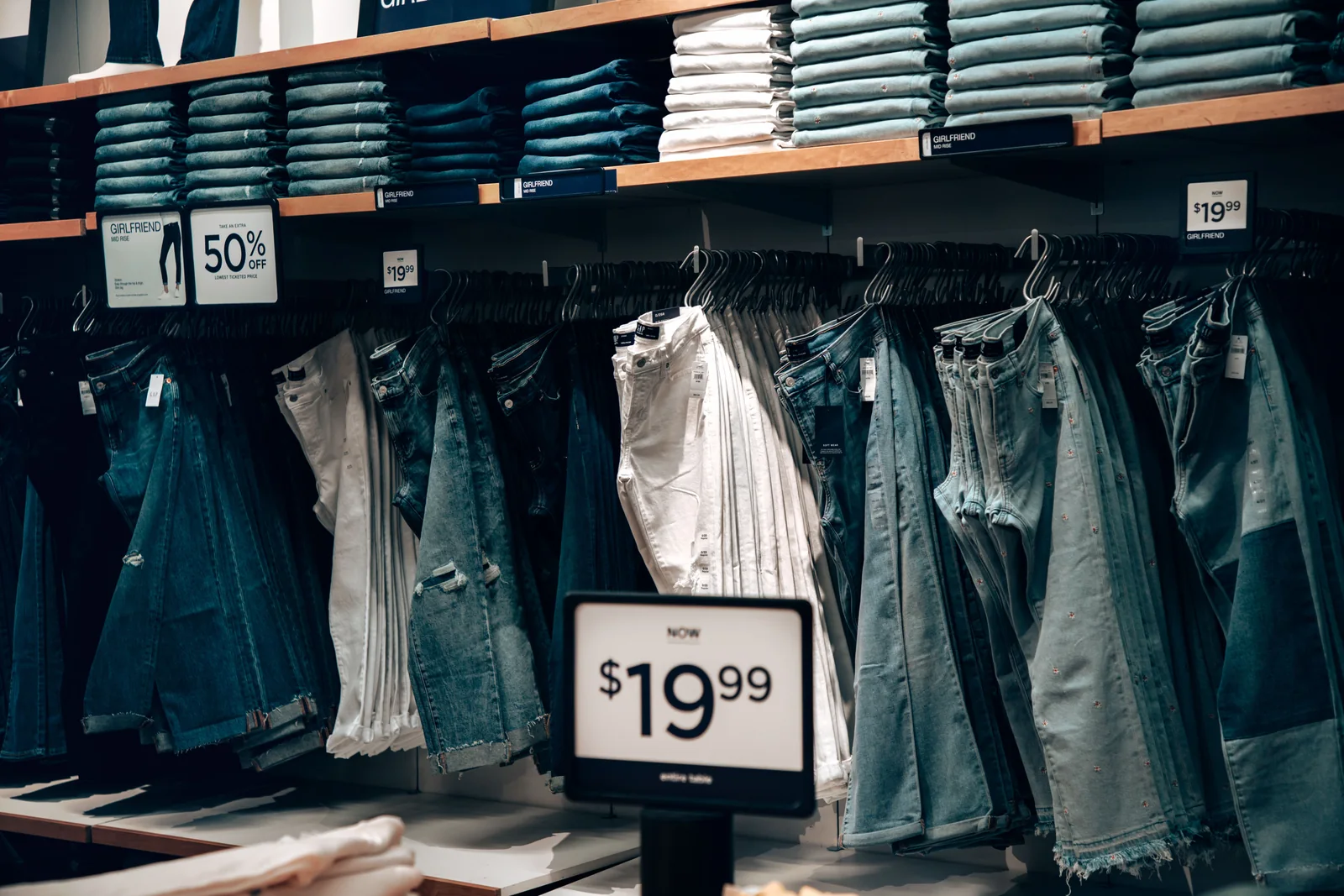
What is the duty-free allowance when returning from the United States?
For travelers arriving in Brazil by air or sea, the general duty-free allowance is US$1,000 per person.
The allowance is individual and cannot be transferred. You cannot combine two family members' allowances to exempt a single item worth more than one person's limit.
There is also an additional US$1,000 allowance for purchases made at duty-free stores upon arrival in Brazil, subject to the Federal Revenue Service's conditions.
Purchases made at duty-free stores abroad, on the other hand, generally count toward the regular baggage allowance.
These rules appear in Brazil's Federal Revenue Service Traveler's Guide.
What happens if I go over US$1,000?
As a general rule, taxable goods covered by the baggage regime are subject to a tax of 50% of the amount above the duty-free allowance.
Imagine returning with US$1,400 in taxable purchases.
The amount over the limit would be US$400, so the tax would be US$200, provided the goods qualify for the simplified baggage regime and meet its conditions.
You must file a declaration through e-DBV under the applicable rules.
Brazil's Federal Revenue Service also distinguishes taxable goods from personal-use items that meet the criteria for exemption.
Simply removing the tag from a new item or using it once does not guarantee that it will be treated as a personal-use item. Inspectors consider the item's nature, the quantity, and the circumstances of your trip.
Are there quantity limits for products bought in the U.S.?
Yes. The dollar allowance isn't the only criterion.
For arrivals by air or sea, Brazil's Federal Revenue Service sets the following quantity limits for the exemption:
| Product type | Limit |
|---|---|
| Alcoholic beverages | 12 liters |
| Cigarettes | 10 packs of 20 cigarettes |
| Cigars or cigarillos | 25 units |
| Tobacco | 250 g |
| Other goods with a unit value under US$10 | Up to 20 units, no more than 10 identical |
| Other goods with a unit value over US$10 | Up to 20 units, no more than 3 identical |
These limits do not authorize imports of prohibited products and do not apply to every type of merchandise without distinction.
Exceeding them can disqualify your purchases from the exemption even if their total value is under US$1,000.
One common example is buying several identical toys as gifts for family members.
Four identical dolls costing US$30 each can exceed the limit of three identical units in that price range.
It's the kind of detail that's easy to miss when you're focused only on the exchange rate.
What about electronics, cell phones, and laptops?
Laptops and tablets, as a rule, do not automatically receive the same exemption as certain personal-use items.
Cell phones may be treated differently depending on how they are used and on the criteria applied by Brazil's Federal Revenue Service.
Before buying an expensive electronic device, check the specific guidance in the Federal Revenue Service's baggage questions and answers.
Another important step is to keep your receipts.
They help establish what you paid and calculate any taxable purchases.
It's also worth thinking about how you'll pay. Our comparison of PayPal, Wise, and Nomad for Orlando travel can help with that part of your planning, but check each platform's current fees and terms before using it.
How to pack for Orlando without forgetting anything important
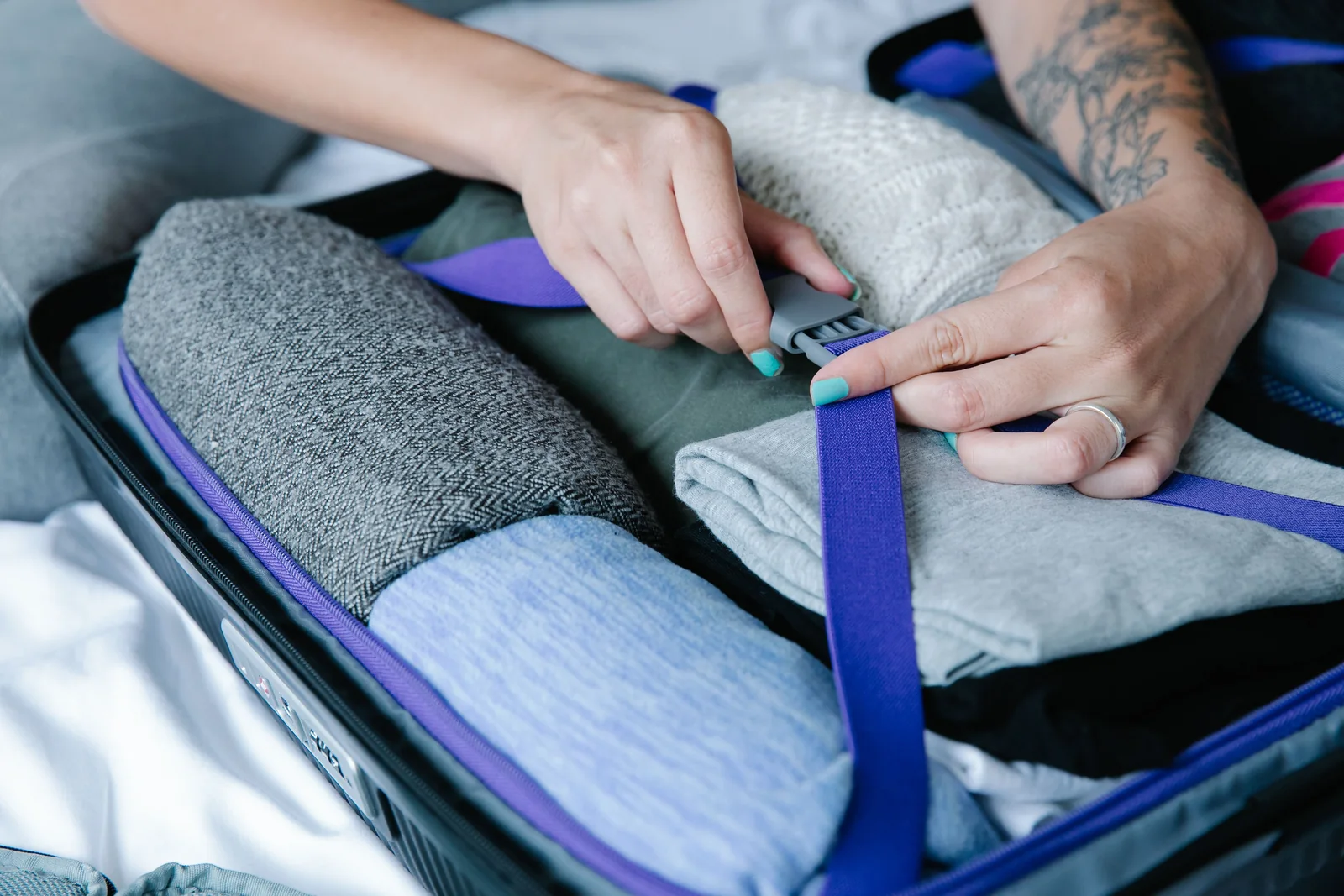
After learning all these rules, the best approach is to turn them into a series of checks.
I'd break the preparations into three stages.
A week before departure, check your baggage allowance, the permitted dimensions, and the price of any additional bags. Also confirm whether the same conditions apply to every leg of your trip.
Two days before departure, organize your medications, documents, and electronics. Check the capacity of your power banks, put liquids in appropriate containers, and weigh your bags. A portable scale can save you a surprise at the check-in counter.
The day before, review your personal item and make sure everything you'll need during the flight is easy to reach. Don't forget to empty your insulated bottle before security.
Here's a tool that can make organizing all of this easier.
Free Orlando travel checklist
At Jornada para Orlando, we offer a PDF checklist to help you review your documents, reservations, luggage, and other important details before departure.
Visit our Downloads page and get the Orlando travel checklist
I suggest saving the file on your phone or printing it to keep track of your preparations.
After all, knowing the rules is important, but remembering everything while you organize documents, bags, reservations, and activities can be a challenge.
Good baggage planning starts before you buy your ticket
The best way to avoid baggage problems isn't simply to travel with less. It's to know what can be carried, which bag it belongs in, under what conditions, and what it may cost.
I'd start by checking the airline's rules before even finishing the ticket purchase. Then I'd separate the items that need special attention: batteries, liquids, medications, and food.
I'd also leave room in my suitcase for the return trip, especially when visiting Orlando, where shopping is often part of the itinerary.
And I wouldn't put off checking the rules until the night before departure. Some situations, such as getting a doctor's letter or requesting permission to carry certain equipment, may require advance preparation.
If you're still in the early stages of your trip, take a look at our guide to planning a trip to Orlando.
A well-packed suitcase isn't necessarily the one with the fewest things in it. It's the one that reaches your destination without unpleasant surprises along the way.


