



 By Juliana Octavini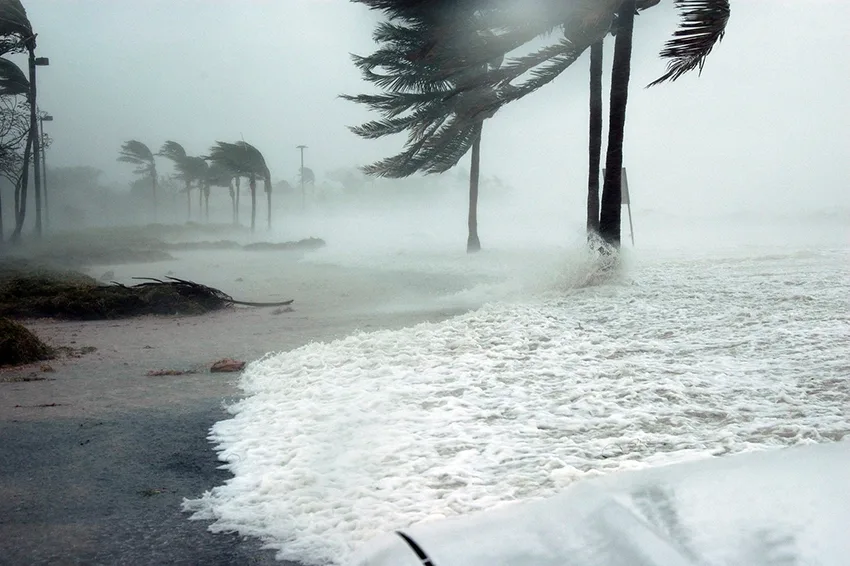
The passage of hurricanes or tornadoes always worries who is traveling to Florida for the first time, especially during this period.
You must be following the news. Hurricane Debby for Florida and the damage he's done in the state, isn't it?
That's why I decided to gather in this post everything you need to know about the hurricane season so it doesn't affect your holiday schedule.
After all, nothing more boring and frustrating than spending months planning your trip and suddenly being taken by surprise by a nature event, is it?
When does it happen?
The hurricane season goes from Start of June until end of November, reaching its peak between August and mid-October.
If you have scheduled trip to Florida during this period, it is worth following the weather forecast and staying informed about hurricanes and tropical storms on the website of National Hurricane Center (NHC) days before your trip. The NHC is the American body responsible for all American climate monitoring.
But don't worry. Even if there is a hurricane or storm forecast during the period, it is not necessary to cancel your trip, okay?
And I'll explain why.
Florida receives the nickname “Sunshine State” because the sun shines almost all year round. The climate guarantees at least 250 sunny days throughout the year!
Orlando is located in the Central Florida region and is far from the coastal region where hurricanes appear (Atlantic Ocean and Gulf of Mexico). For this reason, hurricanes end up losing their intensity when they move over the earth.
By the time hurricanes reach Orlando, they have already lost much of their strength and often become only tropical storms.
Although Florida is among the most hurricane - stricken regions in the United States, many follow routes that bypass or directly hit coastal areas. So Orlando, located in the interior of the state, suffers less direct impact.
This does not mean, however, that the city does not suffer the impacts.
But it is worth noting that it is fully prepared for these events of nature.
FURACONS IN FLORIDE AND THEMATIC PARKS
According to data from NOAA (National Oceanic and Atmospheric Administration)Orlando is among the safest hurricane cities in Florida. The institution, linked to the government, manages coastal and marine environments and issues weather warnings and warnings through the National Weather Service.
No wonder Disney and Universal invested millions and millions of dollars in their parks.

Just so you know, since the opening in 1971, Walt Disney World has closed its parks only nine times. The authorities recommended these measures as a precaution, to protect visitors and employees, not for direct hurricane damage.
Here are the dates when Disney closed its parks:
1 – Furnishment Floyd (1999): the parks were closed for a day.
2 – Hurricane Charley (2004): The parks were closed for a day.
3 - Hurricane Frances (2004): Parks were closed for two days.
4 - Hurricane Jeanne (2004): the parks were closed for a day.
5 - Hurricane Matthew (2016): The parks were closed for a day.
6 - Hurricane Irma (2017): Parks were closed for two days.
7 - Hurricane Dorian (2019): the parks were partially closed for a day.
8 - Hurricane Ian (2022): Parks were closed for two days.
9 - Hurricane Nicole (2022): The parks were closed for a day.
Therefore, traveling to Orlando during this period brings advantages: the city enters a low season, and the prices of airline tickets and accommodation are more accessible.
So don't worry. Even if there are rain forecasts in Orlando during your stay, you can still have fun in the city. There are many attractions you and your family can do on rainy days. In fact, you can check out the post I did below:
📌 Indoor Orlando: What to do on a rainy day?
WHAT TO DO IN CASE OF FURACONS
Unlike earthquakes, which happen suddenly, hurricanes allow early detection. Meteorologists follow their formation in the ocean and increased force over several days.
So, as I mentioned, you can track the information on the NHC website.
The United States constantly invests in prevention measures to prevent tragedies. Authorities shall organise alerts, guidance and evacuation procedures in extreme cases. So yes, traveling to Florida during this period is safe!
When you're on American soil, the system sends notifications directly to your cell phone in case of hurricane or storm alert in the region. Therefore, be alert and follow strictly the official guidelines.
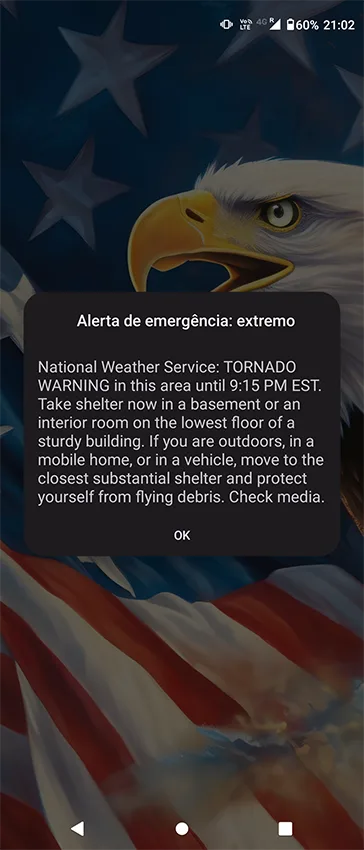
Notifications on cellulars
But how will I be notified? Do I need to install an app or touch my phone settings? Don't! These services work by geolocation, so you will automatically receive these alerts without the need to install apps or configure your device, okay?
Florida residents are already quite used to these alerts but visitors can get scared at first and end up not enjoying the trip as they would like.
As I mentioned earlier, what ends up happening in Orlando are heavy rains that can often bring down trees, roadblocks and lack of energy in certain regions. So it's interesting that you have some food and water stock in case this happens. But no exaggeration, just to supply a few days of your stay.
If you are staying in a hotel, report to the reception and follow the guidance of the team, which receives training and is therefore prepared for situations like this.
It is worth noting that if there is a risk of hurricanes in Florida, do not be alarmed if you face crowded airports, queues and flight delays, the possibility of evacuation of hotels (if they are in risk areas such as coastal regions) and, in addition, many queues at gas stations and supermarkets.
THE SCHOOLS OF THE FURACONS
The scale used to measure hurricane intensity is called Saffir-Simpson and inherited this name from engineer Herbert Saffir and meteorologist Robert Simpson who in 1969 developed a table to facilitate the understanding of the gravity of the phenomenon and help governments prepare for different scenarios.
The scale is similar to the Richter Scale – which categorizes the magnitude of earthquakes – and divides the intensity of hurricanes into five categories, the first with the lowest danger and the last with the highest. Thus, it takes into account the speed of the winds and the elevation of sea level. Look:
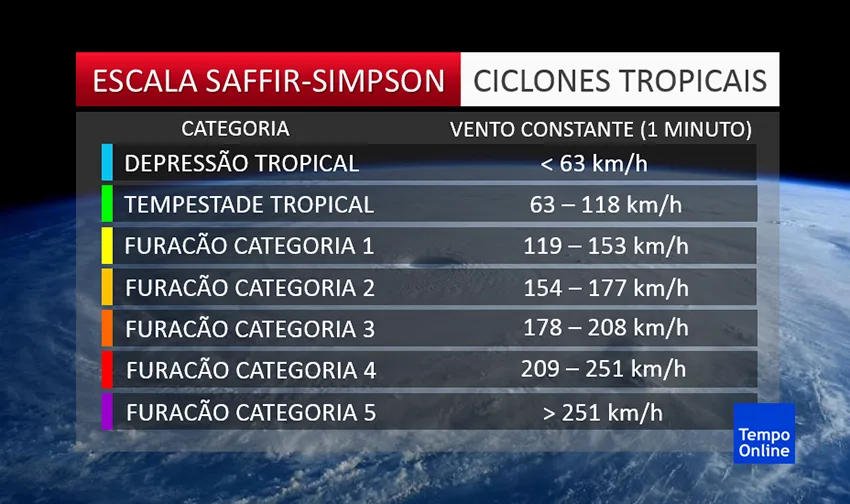
Category 1 : The winds reach a speed of 119 and 153 km/h and the waves can increase up to 1.5 meters above normal. This category does not cause harm or casualties.
Category 2: The winds reach a speed of 154 and 177 km/h and the waves can reach up to 2.4 meters high. In this category, some damage can be caused, such as tree falls and lack of electricity.
Category 3; The winds reach a speed of 178 to 209 km/h and the waves can reach 3.6 meters high. In this category, there is some considerable damage, such as possible flooding, especially in coastal regions.
Category 4: Winds reach speeds between 210 and 249 km/h and waves exceed 5 meters high. In this category, there are extensive damage, floods, falls of trees and the possibility of victims.
Category 5: Winds reach speeds exceeding 250 km/h and waves reach 20 feet high. It is the most dangerous category, which leaves a great devastation and dead.
FAQ – Hurricane Season in Florida
The official season goes from June to November, with greater intensity between August and October. During this period, it is important to follow the forecasts on the site of National Hurricane Center (NHC).
Yeah. Orlando is in the interior of Florida, far from the coastal areas where hurricanes form. Soon upon arriving in the city, hurricanes have already lost power and usually become tropical storms.
In addition to fewer parks, hurricane season coincides with the low season. That means Cheaper flights and accommodation, that is, ideal for those seeking economics.
The emergency system sends Automatic notifications via mobile phone, no need to install applications. Just be on American soil to receive security alerts.
Follow the guidance of local authorities.
Check information on the website of NHC.
Maintain a small supply of water and food.
If you're in a hotel, follow the staff instructions, which are trained to deal with emergencies.
The intensity is measured by Saffir-Simpson Scale, which goes from Category 1 (less dangerous) until Category 5 (most devastating), considering wind speed and, in addition, sea level elevation.
Not necessarily. Most hurricanes don't hit Orlando directly. With planning and monitoring of predictions, you can safely enjoy the trip.


