



 By Juliana Octavini
Driving in Orlando can be one of the most practical ways to get around on a trip to Florida. Although the city has transportation per app and other alternatives, the car offers freedom to visit the parks, outlets, supermarkets, restaurants and attractions that are scattered throughout the region.
For those who come from Brazil, however, some traffic rules can cause strangeness. Turn right at red light, intersections with stop signs in all directions, electronic tolls, school buses and different types of parking are just a few examples.
In this guide, you will understand how to drive in Orlando, what documents to take, how car rental works, Florida's main traffic rules, tolls, supply, parking and what to do in situations like a police approach or an accident.
Warning: traffic rules can change. The information below is based on the official standards and guidelines currently available and should be used as general guidance, not as legal advice.
Is it easy to drive in Orlando?
In general, Yeah..
The main avenues and highways of the region are well signaled, many roads are wide and rental cars usually have automatic exchange and driving assistance resources.
The biggest challenge for the Brazilian, however, is usually less the driving itself and more the difference between some American and Brazilian traffic rules.
Among the situations that most require attention are:
- Stop plates at intersections;
- conversion to the right at red light;
- tolls without cabin;
- school buses stopped;
- rules for changing track;
- speed limits;
- parking;
- expressed tracks;
- circulation of pedestrians and cyclists.
Therefore, even if you have been driving for many years in Brazil, it is worth knowing the local rules before withdrawing the car.
What does it take to drive in Orlando?
For a Brazilian tourist, the main point is to have a Brazilian CNH valid.
Florida legislation allows a non-resident to drive with a valid driver’s license issued by his home country, provided he is qualified for that type of vehicle. The state legislation does not establish a general rule of “180 days” for tourists, therefore we removed this information from the previous version of the article.. (Florida legislation)
What do we recommend taking?
To avoid problems, travel with:
- Brazilian CNH valid;
- passport;
- Vehicle rental documents;
- proof of the rental reservation;
- card used for rental when required by the company.
What about the international driving permit?
PID is a standardized translation of the driver's license and does not replace the original CNH.
Although Florida legislation recognizes the valid wallet issued by the visitor's country of origin, requirements may vary between car rental companies and specific situations. So, for anyone who wants to rent a car, having PID may be a useful precaution, mainly to facilitate the presentation of the information on the qualification.
If you decide to issue PID, always travel with CNH + PID.
What's the minimum age for car rental in Orlando?
Minimum driving age and minimum age for rent a car They're different things.
Rentals usually allow rent from 21 years, but drivers under 25 may be subject to a additional rate of young driver.
The rules vary according to:
- rental company;
- vehicle category;
- place of withdrawal;
- the age of the driver;
- period of the lease.
Therefore, always check the specific conditions before booking.
Tip: If there is more than one driver on the trip, also check if there is charge for additional driver (additional driver).
Is a car worth renting in Orlando?
For many trips, yes — but not necessarily for all. The car can be especially interesting if you want to:
- visit several parks;
- shopping in outlets;
- know supermarkets;
- visit restaurants outside tourist complexes;
- take walks outside Orlando;
- stay at home for the season;
- travel with children or many suitcases.
On the other hand, if you plan to stay almost every day within the parks and stay in a well-connected region, it may be possible to spend a few days without a car and use Uber or Lyft.
A good strategy
Don't just think about the price of the daily.
Compare:
rent + parking + gasoline + tolls
with
Uber/Lyft + any additional displacements.
For some families, the car pays a lot. Not for others.
How to choose the rental car?
For most Brazilian families, an automatic car is enough.
Before booking, consider:
- the number of passengers;
- quantity of bags;
- duration of the journey;
- need for a seat;
- space for purchases;
- amount of displacements.
If you intend to do a lot of shopping in outlets, Walmart and supermarkets, Don't underestimate the trunk space. Also, a car that looks big for four people can get small when you put four bags, backpacks and shopping bags
Make below your car rental!
Rental car insurance: what you need to know
This is one of the most important points when renting a car in the United States.
The rental companies offer different types of protection and, among the most common nomenclatures, are: LDW/CDW
It is protection related to damage or loss of rental vehicle. Depending on the contract, you can reduce or eliminate the tenant's liability for certain damage to the car.
LDW stands for Loss Damage Waiver and, technically, it is an exemption from liability, not simply a “safe”.
LIS/SLI
It is additional protection related to civil liability to third parties.
The names and conditions vary between the rental companies.
Warning
Do not assume that all insurances are automatically included in the daily. So, before you remove the car, read the contract and check:
- which is included;
- franchise;
- coverage for third parties;
- damage to the vehicle;
- assistance;
- exclusions;
- Who can drive the car.
Also check if your credit card offers any coverage for vehicle rental and, in addition, what are the conditions to activate it.
How to drive in Orlando: main traffic rules
Florida's transit follows the circulation by right hand, as in Brazil.
But some rules deserve special attention.
1. Seatbelt
Belt use is mandatory according to state rules, and children have specific safety requirements.
Florida requires appropriate retention devices for children up to 5 years of age. Children from 0 to 3 years old should use an appropriate seat; at 4 and 5 years old, the law allows a chair or booster seat, as the case may be. (DMV Florida)
In addition to the legal requirement, it is essential to use a device suitable for child size and weight.
If you are travelling with young children, check with the rental company in advance if there will be adequate seat availability or consider taking one separately.
2. Respect speed limits
Speed limits are always indicated by plates.
In Florida, the maximum allowed does not exceed 70 mph (about 113 km/h), but that does not mean that all roads have that limit. In urban, residential and school areas, the values may be much lower. (DMV Florida)
Some useful conversions:
| Miles per hour | Approximately |
| 20 mph | 32 km/ h |
| 25 mph | 40 km/ h |
| 30 mph | 48 km/ h |
| 35 mph | 56 km/ h |
| 45 mph | 72 km/ h |
| 55 mph | 89 km/ h |
| 65 mph | 105 km/ h |
| 70 mph | 113 km/ h |
Do not use this table to replace the road signage. So it's just to make it easier to understand speeds, okay?
3. Can you turn right on the red light?
Yes, in many cases.
In Florida, it is allowed to make the conversion to the right at the red light after a complete stopprovided that:
- there is no plate prohibiting conversion;
- there are no pedestrians with priority;
- there is no other vehicle with preference;
- the conversion can be safely performed.
So it's not enough to slow down. It is necessary stop completely before making the conversion.
Look for these signs:
NO TURN ON RED
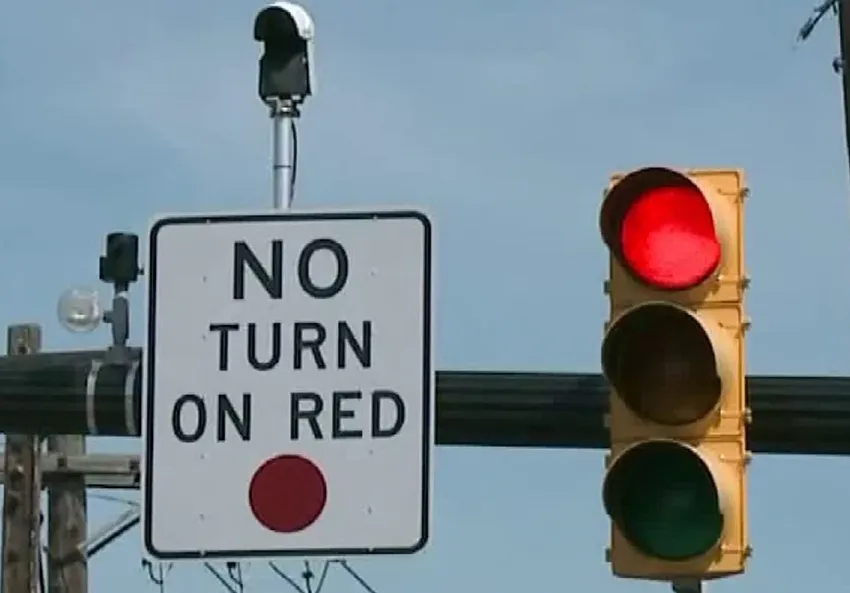
If there is such signaling, conversion is not permitted.
4. What does STOP stand for everywhere?
You'll probably find intersections called 4-way stop or all-way stop.
That means all vehicles must stop. In general:
- who arrives first at the crossing has the preference to follow;
- if two vehicles arrive almost at the same time, the preference is the vehicle to the right;
- Everyone must respect the order of arrival and follow carefully.
Take your time.
This is one of the places tourists usually get insecure. Stop completely, watch the other vehicles and proceed when it is your turn.
5. What about the rotations?
In the rotations, the logic is different from the 4-way stop.
On entering a roundabout, Give preference to vehicles that are already circulating in it, according to the signage.
Don't just walk in because you got here first.
Also pay attention to the tracks, because some rotations have more than one circulation strip.
6. Use arrow when changing track
On American highways, band changes are frequent.
Always:
- signal;
- check the mirrors;
- check the blind spot;
- Make the change only when there is enough room.
And don't get unnecessarily in the left lane when there's faster traffic wanting to get over it.
Florida's official orientation is that slower traffic remains to the right and that the left lane is used for overruns and appropriate situations. (DMV Florida)
7. Watch your phone.
Here we need to correct some information from the old article.
Florida has a law against the use of wireless communication devices for certain activities, especially typing, sending or reading messages while driving. The legislation also prohibits the use of portable devices in certain schools zones and work zones. (DMV Florida)
So it is not right to simply say that “every use of mobile phone is prohibited”.
In practice, however, our recommendation is simple:
Don't keep handling your phone while you're driving.
Configure GPS before leaving and use:
- mobile support;
- voice commands;
- Android Auto;
- Apple CarPlay;
- Vehicle multimedia system.
The passenger can handle navigation while you drive.
8. School bus: maximum attention!
This is one of the rules that scare Brazilians the most.
When a school bus is stopped for boarding or disembarking of children and has the stop signal triggered, the vehicles shall stop in accordance with the specific rules of the track.
On a double-handed street or road without a physical separation barrier, the two-way vehicles must stop.
On the other hand, if the highway is divided by a high barrier or unpaved bed with at least 5 feet wide, vehicles that are in the opposite direction to the bus do not have to stop — but those in the same direction still have to stop. (DMV Florida)
Practical rule for tourists:
Did you see a school bus stop with the stop sign open? Stop and watch before you continue.
Don't try to get over it.
9. Pedestrians have priority in certain situations
Pay special attention to crosswalks, tracks intended for pedestrian crossing.
Drivers must respect the right of pedestrians to travel in situations provided for by legislation.
Also be careful in:
- parking lots;
- hotel entries;
- Disney Springs;
- Outlet areas;
- parks;
- crossings;
- tourist regions.
Besides, never assume the pedestrian will wait for you to pass.
10. Watch out for bikes
The bicycle is considered to be a vehicle for traffic on Florida public roads and has rights and responsibilities provided for in the legislation.
When crossing a bicycle, the driver must maintain at least 3 feet away, approximately 91 centimeters. (DMV Florida)
Also, when converting, be careful with bikes using a bike lane.
11. Move Over Law: Stay tuned for stationary vehicles
That's a very important rule in Florida.
A Move Over Law determines that the driver must change lane when safe when approaching certain vehicles standing on the side of the track with appropriate signalling.
The rule also currently contemplates certain broken or stopped vehicles, provided that they are in the conditions laid down by law, such as the use of emergency lights, signs or visible presence of persons. (Florida legislation)
However, if it is not possible to change track safely, the driver must reduce speed by 20 mph below the specified limit.
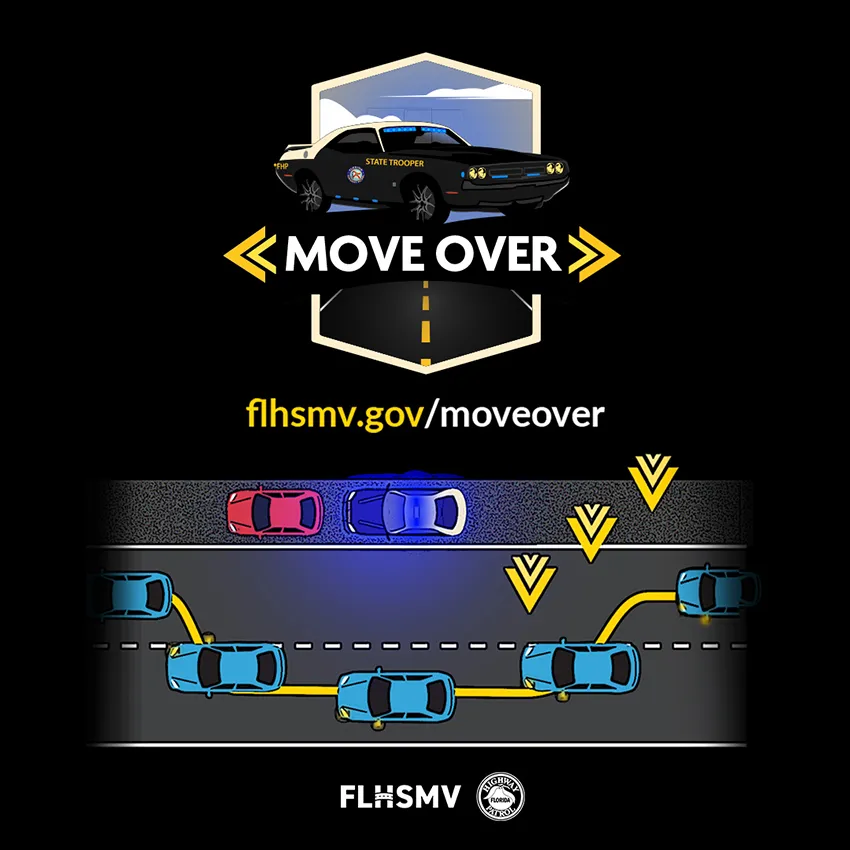
For example:
Limit of 60 mph → reduce to 40 mph.
This rule exists to protect police officers, emergency teams, maintenance workers and people who are facing problems with their vehicles.
How do tolls work in Orlando?
Orlando has several toll roads, or Pedified highways.
Among the important routes in the region are:
- SR 408;
- SR 417;
- SR 429;
- SR 528;
- Florida's Turnpike;
- other highways run by different authorities.
In central Florida, the Central Florida Expressway Authority (CFX) uses electronic charging and went through a transition to to tolls without cash collection. The current CFX tariffs are defined by square and payment method. (Central Florida Expressway Authority)

SunPass or E-PASS: Which to use?
That's a common doubt.
O SunPass is Florida toll system, while the E-PASS is operated by Central Florida Expressway Authority and is especially present on the highways of the Orlando region.
Systems are interoperable on most Florida highways, but the most important thing for the tourist is to understand how tolls will be charged in rental car.
In the rental car
Rental companies usually offer some form of electronic tolling.
The operation and fees vary according to the company.
So, do not automatically accept the foreground offered on the counter without understanding how it works.
Check it out:
- recovery per day;
- administrative fee;
- collection by toll;
- maximum cap during lease;
- if the plan includes all tolls;
- when the charge will be made.
SunPass himself informs that the rental companies have different programs and that the fees must be checked in the rental contract. (SunPass)
Can I use my own SunPass or E-PASS in the rental car?
Yeah.
SunPass allows you to use the transponder on a rented vehicle, provided that the vehicle and plate are added to the account during the rental period. After return, the transponder shall be removed from the vehicle. (SunPass)
The E-PASS also allows you to use certain transponders in rented vehicles, provided that the card is updated in the account before generating tolls. CFX warns that there may be a delay of up to 48 hours in binding the plate, so it is important to do the procedure correctly. (Central Florida Expressway Authority)
For a short trip
For most tourists, it may be easier to use the toll program offered by the rental company itself.
But compare the fees before deciding.
Is there a toll in money in Orlando?
Don't count on the possibility of paying all the tolls in cash. The region has electronic charging and many roads use systems without cabin.
CFX reports that it made the transition to cashless tolling, that is, collect without payment in cash in the square. (Central Florida Expressway Authority)
So whoever has a rental car should leave the store knowing. exactly how tolls will be charged.
How to fuel the car in Orlando?
Supplying in the United States is relatively simple. But unlike Brazil, gasoline is sold by gallon, and:
1 gallon = approximately 3.78 liters.
The price indicated on the post plate is usually the value per gallonNot per liter.
How does it work?
In many places:
- park by the pump;
- choose the form of payment;
- allow the card;
- choose the fuel type;
- supply;
- Finish the transaction.
If the Brazilian card does not work directly in the pump, you can enter the store of the post and request the supply paying in advance.
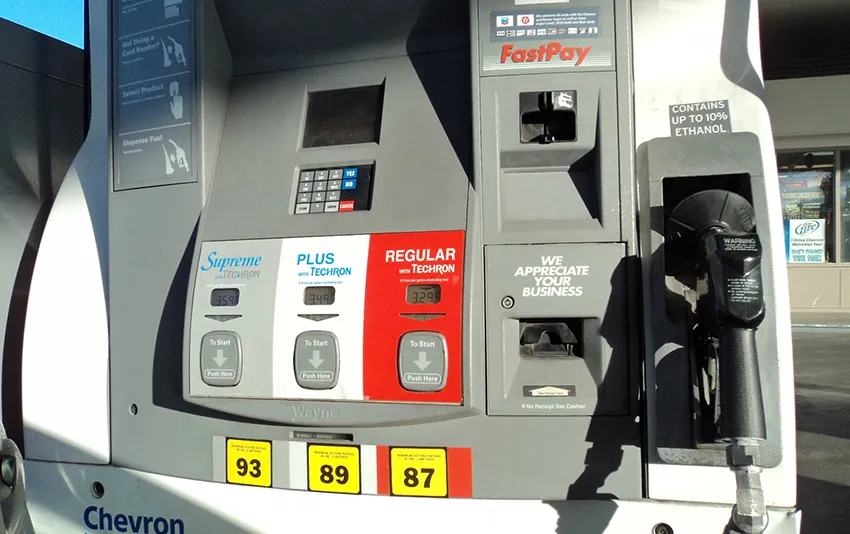
Attention to fuel type
Rented vehicles normally use gasoline. Don't put diesel in a gas car.
If in doubt, check the label on the tank cover or vehicle manual.
GPS: Google Maps or Waze?
You're both great at driving in Orlando. The most important thing is to choose the one you already know.
They can help:
- find routes;
- check traffic;
- locating posts;
- find supermarkets;
- identify tolls;
- calculate travel time;
- Find parking lots.
An important tip: Do not configure the GPS while driving. Do this before leaving or ask the passenger to change course.
Is it worth avoiding GPS tolls?
Depends. On some routes, avoiding tolls can greatly increase travel time. In others, the difference is small.
So I wouldn't use the option. “avoid tolls” automatically.
If the goal is to quickly reach the park, airport or attraction, often paying a few dollars toll can save time.
Like driving on rainy days in Orlando?
Florida can have heavy rains, especially during the warmer months. In a storm:
- Don't try to cross flooded areas.
- reduce speed;
- increase the distance from the front vehicle;
- light the headlamps when necessary;
- avoid sudden braking;
- take care with accumulated water;
What about the storm alerts?
If the phone issues an important weather alert, don't ignore it.
Strong storms, lightning, intense winds and even tornadoes can occur in the region. So if the conditions are too bad, Find a safe place and wait for the situation to improve.
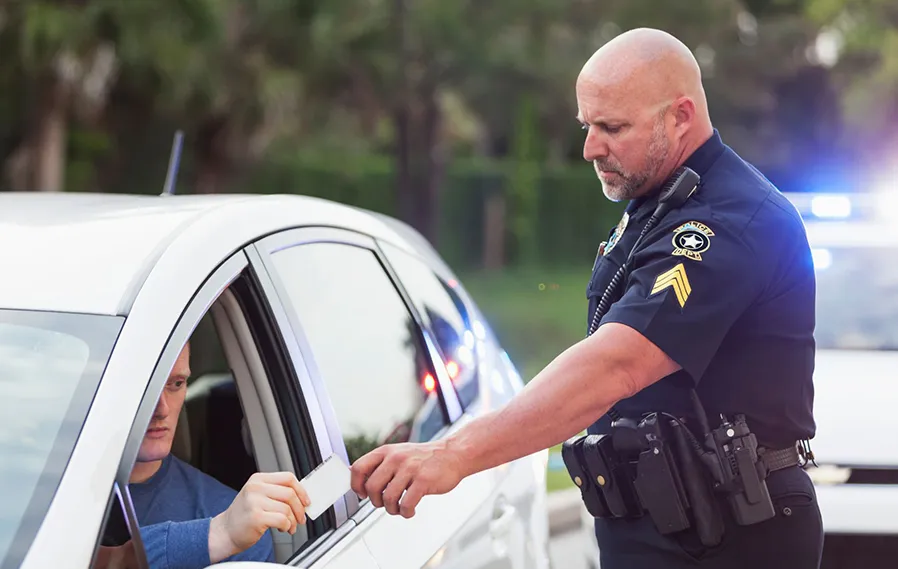
What to do if stopped by the police?
If a cop asks you to stop:
- reduce speed;
- signal;
- stop in a safe place;
- Stay calm;
- keep your hands visible;
- wait for the officer's instructions;
- present the requested documents.
Avoid making sudden movements or searching for documents before the officer explains what he wants.
If you do not understand any instruction, ask politely for it to be repeated.
What if there's an accident?
If there's an accident:
In an emergency situation
Call me. 911.
If there are injuries or immediate risks, prioritize the safety of people.
In a collision unharmed
When it is safe:
- stop the vehicle;
- trigger the flare;
- exchange information with the other driver;
- record photos;
- does not admit liability on the spot;
- contact the rental company;
- follow company guidelines on the accident.
If necessary, request the presence of the police.
Florida Highway Patrol also offers the number **FHP (347) for traffic-related situations, such as accidents and dangerous drivers. (DMV Florida)
Parking in Orlando: what you need to know
Parking in Orlando can be very easy, but it can also generate fines when you ignore the plates.
Always observe:
- time allowed;
- need for payment;
- reserved vacancies;
- loading and unloading areas;
- “No Parking” signs;
- time limits;
- local-specific rules.
Never park for disabled people without permission.
This is a serious violation. Also be careful with:
- hydrants;
- ramps;
- pedestrian tracks;
- entries and exits;
- Emergency areas.
Parking in the parks
In Disney, Universal and SeaWorld parks, parking is usually paid for and the rules may vary according to the park and the type of ticket or benefit.
I did a full post on Disney and Universal parking lots, I highly recommend reading!
Express and HOV Tracks: Attention not to confuse
There are different types of expressed tracks and specific usage rules.
Some may be subject to toll collection and others have their own access rules.
My recommendation: Never get into a lane just because it looks faster.
Note:
- signalling;
- plates;
- symbols;
- number of occupants required where there is one;
- toll collection.
If you are in doubt, stay on the regular tracks.
Is driving in Orlando at night safe?
The main tourist routes are quite busy, but driving at night requires additional attention.
Be careful especially in:
- low-light roads;
- areas outside the tourist region;
- roads;
- rain;
- Parking entrances and exits.
And remember that Orlando has many wild animals and natural areas nearby. Therefore, in certain regions, it is important to be aware of the presence of animals on the track.
Is it true the rental cars are automatic?
Yeah. The vast majority of cars available for tourists in American video stores own automatic exchange.
For those who have never driven an automatic car, the adaptation is usually quick. The most common positions are:
- P – Park: parked;
- R – Reverse: reverse;
- N – Neutral: neutral;
- D – Drive: Drive.
Some vehicles also have ways like L, S or MDepending on the model.
Before leaving the car rental car park, familiarize yourself with:
- exchange rate;
- brake;
- headlamps;
- cleaners;
- air conditioning;
- cruise control;
- Back camera.
Fines and traffic offences
The fines for driving in Orlando vary according to the severity of the violation, such as speeding, irregular parking or disrespecting traffic rules.
Generally, the driver must pay the fines directly to the agency responsible or through online systems. It is therefore essential to pay attention to local rules to avoid penalties.

In addition, when parking near restaurants or supermarkets, attention needs to be redoubled. Specific vacancies are reserved for disabled persons and, if misused, high fines can be applied, in addition to the risk of the car being towed.
Mandatory stops when driving in Orlando: attention to school bus
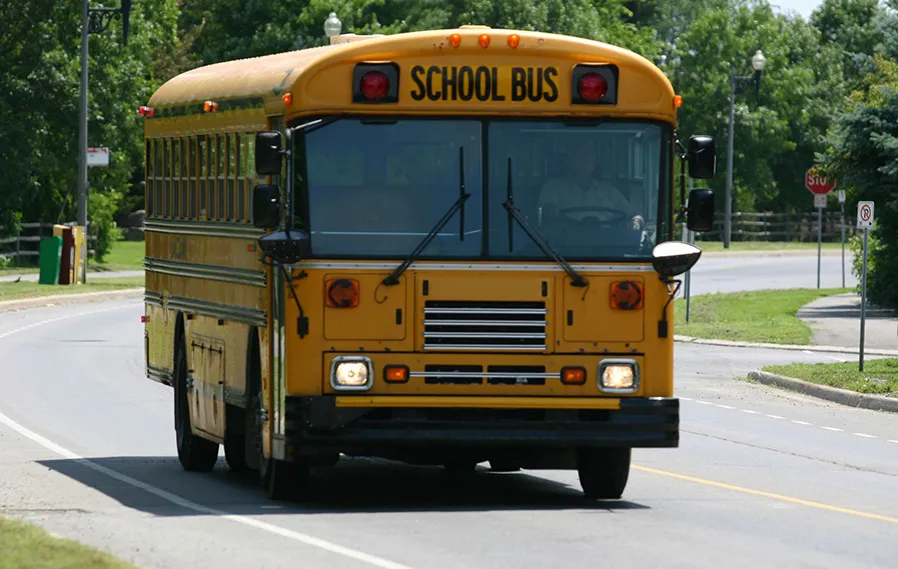
A very important rule when driving in Orlando concerns school buses. Therefore, when they are stopped with flashing warning lights and the “stop” plate extended, all vehicles, in both directions of the track, must stop completely.
It is only allowed to follow journey when the bus resumes movement or the lights are turned off. This measure aims to protect the safety of students.
Other moments when the driver must stop while driving in Orlando
In addition to school buses, other situations require the complete stop to be made:
- In signs of “stop” or “step”.
- When emergency vehicles, such as ambulances, police cars or fire trucks, have lights or sirens on.
In such cases, safety and compliance with standards must prevail.
Important tips for those driving in Orlando
1. Don't just depend on memory
Use GPS. Even if you know Orlando, new roads, works and traffic changes can alter the paths.
2. Read the signs
In the United States, many important rules are indicated directly in the signage.
3. Don't be afraid to drive slowly
It's better to lose a few minutes than make a hasty decision on an unknown route.
4. Beware when leaving the parking lot
After spending hours in a park, you may be tired. Therefore, pay extra attention when leaving the parking lot and entering the main roads.
5. Plan the tolls
Before you leave the store, know how they will be charged.
6. Do not leave objects of value visible
Even in tourist areas, do not leave bags, electronics or shopping exposed inside the car.
7. Have water in the car
Especially during the warmer months.
8. Take breaks on long trips
If you're driving to Miami, Tampa, Kennedy Space Center or any other city, plan for stops.
Checklist before leaving with rental car
Before leaving the rental company, check out:
☐ CNH
☐ Passport
☐ Rental contract
☐ Insurance/contracted cover
☐ How the toll will work
☐ Vehicle plate
☐ Fuel level
☐ Possible damage already existing
☐ GPS configured
☐ Cell phone loaded
☐ Chair, if necessary
☐ Hotel address saved
☐ Contact the rental company
This little conference can avoid a lot of headache during the trip.
Is it worth driving in Orlando anyway?
For many Brazilians, Yeah..
Orlando is an extensive city and several attractions are relatively distant from each other. Therefore, having a car can provide more freedom to combine parks, shopping, restaurants and other tours.
But there is no single answer.
If you plan to spend many days in the parks, stay in a well-located hotel and not make many purchases, it may be more economical to use transportation per app.
But if you want to explore the region, shop, visit different restaurants and tour outside the parks, The car will probably be much more convenient.
The important thing is to put all costs on the account:
rent + insurance/coverage + parking + gasoline + tolls.
So you can compare the actual cost of the car with the other transport alternatives.
Driving in Orlando might be easier than it looks
The first hours behind the wheel can cause a little insecurity, mainly because of the differences between American and Brazilian rules.
But after understanding some fundamental situations — how 4-way stop, red conversion, school bus, electronic tolls, Move Over Law and parking — driving in Orlando tends to become much simpler.
The secret is not to rush, pay attention to signage and, above all, remember that local rules should always prevail over what you are accustomed to do in Brazil.
Have a safe trip and, above all, Good road!
Updated August 18, 2026
Frequently Asked Questions about driving in Orlando
Yeah. Non-residents can drive in Florida with a valid driver's license issued by their home country.
The valid Brazilian CNH is recognized for non-residents. PID does not replace CNH and can be useful as a precaution, especially in car rental.
Yes, it is usually allowed after a complete stop, provided that there is no signage prohibiting conversion and that it is safe to do so.
Yes, when the bus is stopped with the stop sign on. On two-way routes without physical separation, the two-way vehicles must stop.
Tolls are predominantly electronic. In rented cars, charging and fees vary according to the rental company. You can also use SunPass or E-PASS.
Yeah. It is necessary to register the vehicle and the plate correctly during the rental period. When you return the car, remove the transponder.
Yes, and there are specific rules for children. So Florida requires appropriate retention devices for children up to 5 years old.
The state ceiling does not exceed 70 mph, but each track has its own signaling and the limit can be much lower.
Florida has specific restrictions on the use of wireless devices. In practice, the recommendation is to avoid handling the mobile phone while the vehicle is moving.


