



 By Juliana Octavini
Shopping in American markets, especially in Orlando, offers a different experience for Brazilian tourists. This is because the wide variety of products, brands and names can be confusing, and the United States classifies some items very differently from Brazil.
So, buying basic products such as water, milk, bread, eggs and meat can be a real nightmare for some first-timers.
Therefore, to help you with this mission, I created this “guide” so you can understand the main differences between some products and know how to choose each one on the shelves without any headaches!
Products that create confusion in Orlando's American markets
Water
In the American markets in Orlando, you will find different types of bottled water. Therefore, knowing which one to choose can avoid unnecessary expenses or even an unpleasant taste surprise.
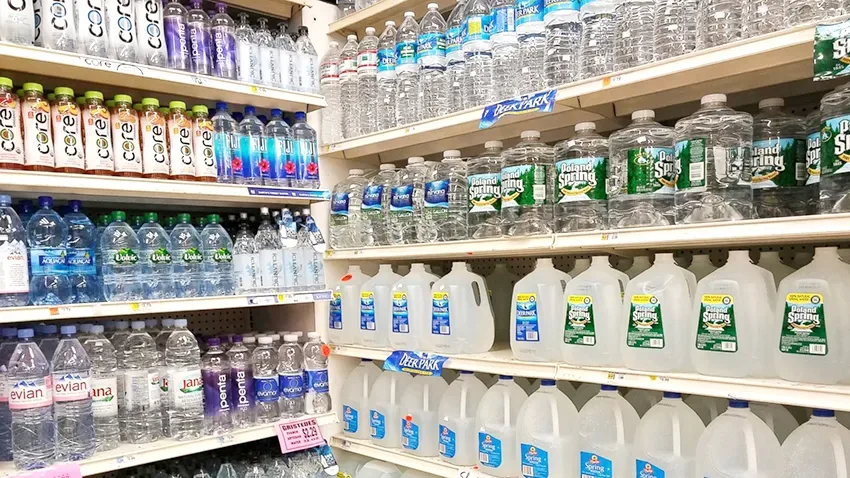
Types of water
- Spring Water: Spring water, usually from a natural source.
- Purified Water: Water purified by processes such as reverse osmosis.
- Distilled Water: Distilled water, without minerals, generally used for industrial or medical purposes.
- Mineral Water: Mineral water with natural addition of minerals.
- Flavored Water: Flavored water, that is, it may contain sugar or sweeteners.
- Sparkling Water: Carbonated water, equivalent to sparkling water in Brazil.
In the United States, many waters contain added fluoride (Fluoridated Water), so if you want to avoid it, check the label.
Differentiated PH
Many brands offer waters with an alkaline pH, that is, they are promoted as beneficial for the body's balance. Some examples include:
- Alkaline Water: Alkaline water with a high pH (generally between 8 and 10).
- pH Balanced Water: Water with a pH adjusted to be neutral or slightly alkaline.
Electrolyte Waters
First of all, it is worth mentioning that some waters have added electrolytes to help with hydration, especially aimed at athletes. For example:
- Electrolyte-Enhanced Water: Contains minerals such as sodium, potassium and magnesium.
- Sports Water: May contain electrolytes and even a slight flavor, like Propel and Smartwater.
Coconut Water and other natural options
In addition to regular water, American markets usually have several natural alternatives, such as:
- Coconut Water: Coconut water, usually sold in bottles or boxes.
- Maple Water: Water extracted from maple sap, slightly sweet.
- Birch Water: Water from birch sap, rich in antioxidants.
Bottle Sizes
In US supermarkets, water bottles vary greatly in size. Therefore, it is worth paying attention, as the measures may cause some confusion among Brazilians. Some common options are:
- 16.9 oz (500ml) – Individual pattern.
- 20 oz (591ml) – Slightly larger than standard bottle.
- 1 gallon (3.78L) – Very popular for fueling the house.
- 5 gallons (18.9L) – For water dispensers, found at stores like Walmart and Costco.
Eggs
In the American markets in Orlando, eggs can vary in size, type and the way they were produced. Furthermore, unlike Brazil, eggs in the US are refrigerated.
This occurs because, in the USA, eggs go through an industrial washing process that removes the natural protective layer of the shell (cuticle), making it necessary to store them in a refrigerator to avoid contamination by bacteria, such as Salmonella.
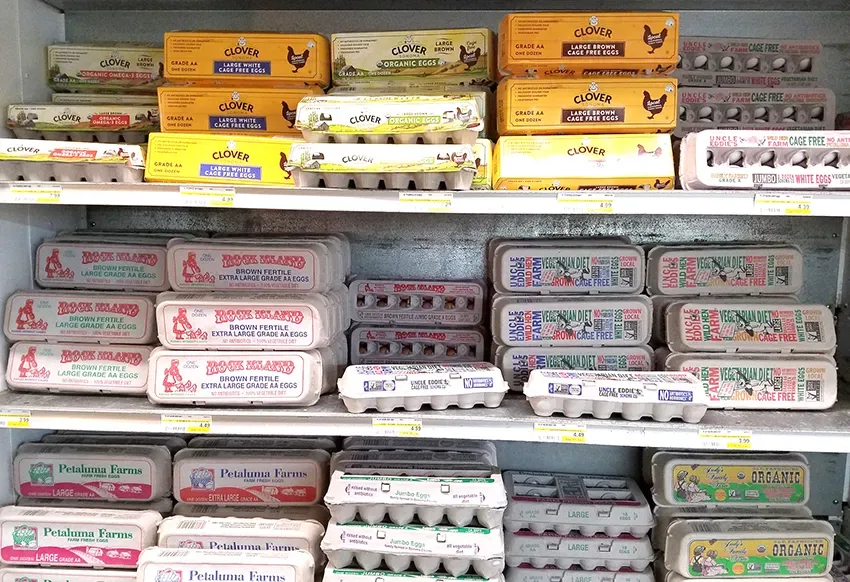
- Egg Sizes:
- Jumbo (larger)
- Extra Large (XL)
- Large (L) – the most common
- Medium (M) and Small (S)
- Types of Production:
- Cage-Free: Chickens raised outside of cages, but still indoors.
- Free-Range: Chickens have access to the external environment.
- Organic: Chicken feed is organic and antibiotic-free.
- Pasture-Raised: Chickens raised free range, with more outdoor space.
Egg Quality Rating
Eggs in American markets in Orlando are classified by quality, which impacts the appearance and texture when cooked:
- Grade AA – Firmer white and rounded yolk, ideal for fried and boiled eggs.
- Grade A – Very similar to Grade AA, but with the egg white a little less firm.
- Grade B – More fluid white and less firm yolk, generally used for industrial preparations and recipes.
Egg Shell Colors
In the American markets of Orlando, you can find eggs with white and brown shells. The difference is not in quality, but in the breed of chicken:
- White eggs – Produced by hens with white feathers and light earlobes.
- Brown eggs – Produced by hens with red or brown feathers, with dark earlobes.
- Blue or green eggs – Rarer, produced by breeds such as the Araucana.
Fortified and Enriched Eggs
In addition to regular eggs, there are options with additional benefits:
- Omega-3 Enriched Eggs: Eggs from chickens fed feed rich in omega-3.
- Vitamin D Enhanced Eggs: Contain a higher level of vitamin D.
- Organic Eggs: From chickens raised on organic feed and without antibiotics.
Milks
The most common way to differentiate milk in American markets is, without a doubt, by the color of the lid, which makes it much easier when choosing:
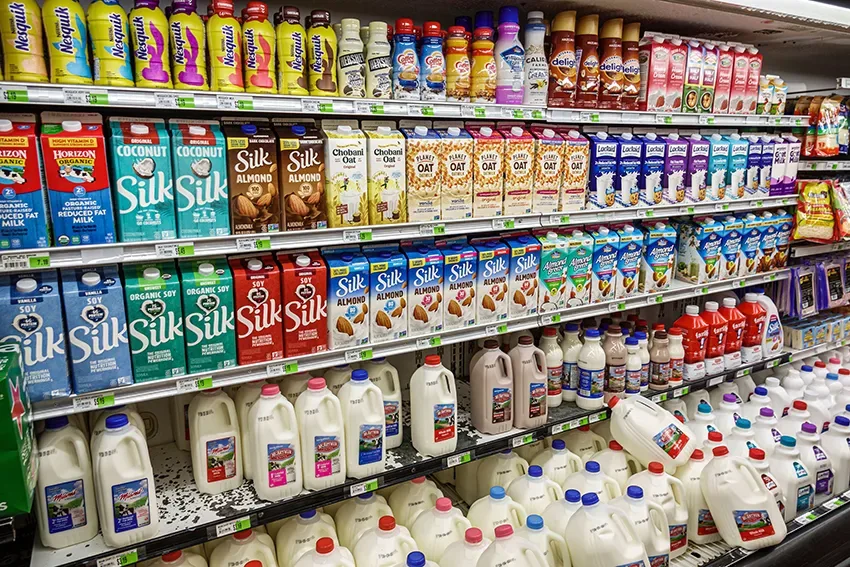
Types of milk
- Red cap: Whole milk (Whole Milk), with around 3.25% fat.
- Blue cap: Semi-skimmed milk (2% Reduced Fat Milk), with 2% fat.
- Green cap: Milk with 1% fat (1% Low Fat Milk).
- Pink or purple lid: Skim milk (Skim Milk or Fat-Free Milk), fat-free.
- Yellow cap: Lactose-free milk (Lactose-Free Milk).
- Black or brown cap: Organic milk (Organic Milk), from cows fed organic feed.
Milk Processing in the USA
In the United States, practically all milk sold in supermarkets goes through specific processes to ensure food safety and, above all, greater durability:
- Pasteurization – Process of heating milk to eliminate harmful bacteria and thus increase product safety. In the US, most milk sold in supermarkets is Ultra-Pasteurized (UP), meaning it has been heated to higher temperatures to extend its shelf life.
- Homogenization – Process that breaks down fat molecules to prevent them from separating. As a result, a milk with a uniform texture.
Special Milks
In addition to traditional milks, the American markets in Orlando offer several options for different diets and needs. Therefore, if you have any restrictions, it is worth paying attention to the labels:
- Lactose-Free Milk – Lactose-free milk, that is, suitable for those who are lactose intolerant.
- Organic Milk – Comes from cows raised without hormones or antibiotics and, therefore, fed organic feed.
- Raw Milk – Raw, unpasteurized milk. This type of milk is regulated in many states and therefore may not be available in conventional supermarkets.
- A2 Milk – Milk produced only with the A2 beta-casein protein, which is easier to digest for some people.
Plant-Based Milks
In Orlando, American markets also have a wide variety of alternatives to cow's milk, each with specific characteristics, such as:
- Almond Milk – Almond milk, light and with a smooth flavor.
- Soy Milk – Soy milk, one of the most protein-rich vegetable alternatives.
- Oat Milk – Oat milk, creamier and therefore naturally sweet.
- Coconut Milk – Coconut milk, more intense flavor and light texture.
- Cashew Milk – Creamy and smooth cashew nut milk.
Fortified Milks
Many milks in the US are fortified with nutrients to provide extra benefits, such as:
- Vitamin D Fortified Milk – Contains added vitamin D to help with calcium absorption.
- Calcium-Enriched Milk – Has a higher calcium content, indicated for bone strengthening.
- Protein Milk – Milk with added proteins, that is, it is ideal for sports diets.
Different Packaging and Expiration Date
In the USA, milk can be found in different packaging and with varying expiration dates:
- Gallon – The most common packaging, approximately 3.78 liters.
- Half-Gallon – About 1.89 liters.
- Quart (946ml) – A smaller option, similar to a liter.
- Shelf-Stable Milk – Cartoned milk (UHT), found outside the refrigerator and with an extended shelf life.
Extra tip
In the United States, it is common to find the Sell By Date on labels, which indicates until when the product can be sold, but not necessarily its actual expiration date. Milk can last a few days beyond this date as long as it is stored correctly.
Breads
The breads in the American markets in Orlando also have very different characteristics from what we are used to in Brazil, and, therefore, the packaging can raise questions. Here are some common variations:
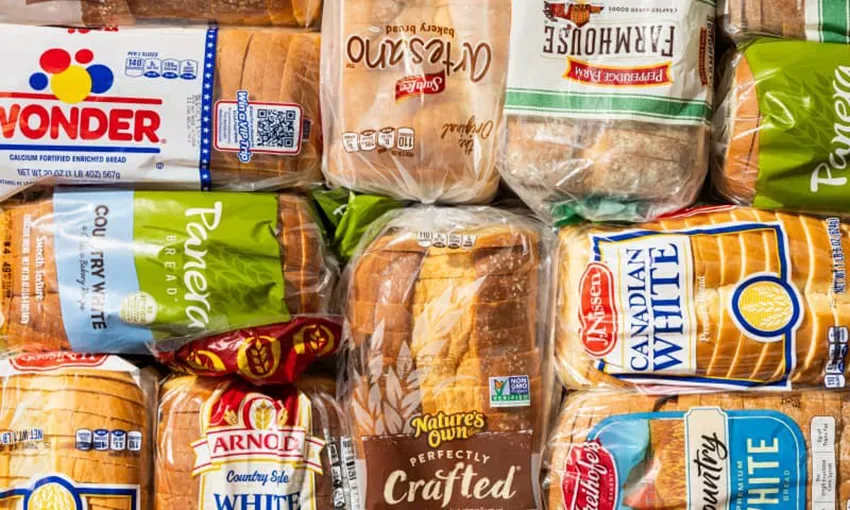
Types of bread
- White Bread – Soft white bread, similar to traditional Brazilian sliced bread.
- Whole Wheat Bread – Wholemeal bread made with whole wheat flour, richer in fiber.
- Multigrain Bread – Made with several types of grains (oats, flaxseed, barley, etc.), making it a more nutritious option.
- Rye Bread – Rye bread, darker and with a strong flavor, often used especially in sandwiches such as the famous Reuben Sandwich.
- Sourdough Bread – Naturally fermented bread, with a slightly sour flavor and harder crust.
- Brioche – Soft, slightly sweet bread, great for burgers and toast.
- Potato Bread – Bread made with mashed potatoes in the dough, which makes it softer and slightly sweeter.
- Bagels – Denser, chewier bread rings, very popular in American breakfasts.
- English Muffins – Small round, flat breads, often used to make Egg McMuffins and toast.
How to distinguish packaging
The color of the packaging usually indicates the composition of the bread:
- Red: White bread.
- Brown: Whole grain bread.
- Yellow: Potato bread or brioche.
In the United States, supermarkets use a color system on the labels on bread packaging to indicate the day of the week on which they were manufactured. Therefore, this helps bakery and supermarket employees replenish products and allows consumers to choose fresher bread. The color code follows the following logic:

- Monday: Blue
- Tuesday: Green
- Thursday: Red
- Friday: White
- Saturday: Yellow
It is important to note that, generally, breads are not baked on Sundays and Wednesdays, so there are no colors assigned to those days. This absence of production on these days allows employees to have time off and, in this way, facilitates distribution logistics.
It is also worth mentioning that this encoding may vary depending on the bakery or supermarket chain, but, in general, it is used in this way. Therefore, it is recommended to check with the specific establishment to confirm the system used. So, by understanding this coding, you can choose fresher breads and plan your purchases better.
Sugar in American Breads
A detail that may surprise Brazilians is that many breads in the USA contain sugar in the recipe, which makes them a little sweeter than their equivalents in Brazil. If you prefer breads with no sugar or less added sugar, check the ingredients and look for options with labels like "No Sugar Added" or "Unsweetened".
Breads for Sandwiches and Burgers
If you are looking for bread for sandwiches or burgers, the common names are:
- Sandwich Bread – Classic sliced bread for sandwiches.
- Hoagie Roll – Baguette-style bread used for sandwiches such as the Philly Cheesesteak.
- Sub Roll – Similar to hoagie, but may be softer.
- Hamburger Buns – Buns for hamburgers, can be traditional, brioche or wholemeal.
- Hot Dog Buns – Hot dog buns, generally softer.
Extra Tip
If you want healthier bread, look for keywords on labels like:
- "100% Whole Wheat" – Made entirely with whole wheat flour.
- "Sprouted Grains" – Made with sprouted grains, which can improve digestion.
- "No High Fructose Corn Syrup" – Without high fructose corn syrup, a common sweetener in American breads.
Meats
Meat cuts in the United States are different from Brazilian cuts. Therefore, they tend to create confusion when shopping. Furthermore, the meat is classified by quality and may have seals indicating the type of animal farming. So, here are the main information you should know before buying meat in the American markets in Orlando.
Beef Quality Classification
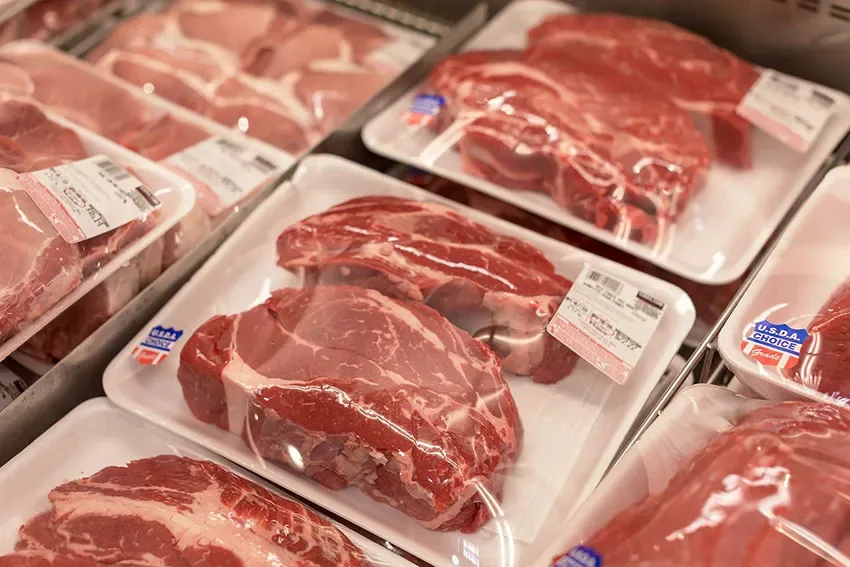
In the United States, beef is inspected by the USDA (United States Department of Agriculture) and, therefore, receives a classification that indicates its quality and level of marbling (amount of fat interspersed in the meat). The main classifications are:
- USDA Prime – Very high quality meat and, in addition, with plenty of marbling. Very juicy and tender, generally found in restaurants and specialized butchers.
- USDA Choice – Good quality, with less marbling than Prime, but still very tasty. This is, without a doubt, the most common in supermarkets.
- USDA Select – Leaner meat, with little streaky fat, therefore, it can be a little tougher and drier if not well prepared.
Tip: If you are looking for juicier meats for barbecue or grilling, opt for the Prime or Choice cuts.
Main Beef Cuts and Their Equivalents in Brazil
The names of meat cuts in the USA are different from those we use in Brazil. So here's a guide to help you find the right cut:
- Ribeye – Equivalent to rib or entrecôte. In other words, it is a well-marbled meat, very tasty and tender.
- New York Strip (Striploin) – Equivalent to striploin, that is, a lean meat with an intense flavor.
- Tenderloin – Equivalent to filet mignon. Therefore, one of the most tender cuts.
- T-Bone – Cut that combines part of the filet mignon and the sirloin, separated by a "T" shaped bone.
- Porterhouse – Similar to T-Bone, but with a larger portion of filet mignon.
- Sirloin – Equivalent to rump, that is, a soft and tasty cut, great for grilling.
- Brisket – Beef brisket, often used for smoked barbecue and barbecue. However, it needs to be cooked slowly to become soft.
- Chuck Roast – Equivalent to chuck roast and, therefore, often used for stews and stews.
- Ground Beef - Minced meat. Pay attention to the amount of fat:
- 80/20 (80% meat, 20% fat) – More juicy, that is, ideal for burgers.
- 90/10 or 93/7 – Leaner ground beef and, therefore, very good for stir-fries.
Tip: If you want a tender steak, look for cuts like Ribeye, Tenderloin or New York Strip. For "low & slow" style American barbecue, however, look for Brisket, which is the most traditional.
Chicken Meat:
Chicken cuts are sold in a similar way to Brazil, but with some different names:
- Boneless, Skinless Chicken Breast – Boneless, skinless chicken breast.
- Chicken Thighs – Chicken thighs (can be sold with or without bones/skin).
- Chicken Drumsticks – Drumsticks (lower part of the thigh).
- Whole Chicken – Whole chicken.
- Chicken Wings – Chicken wings, popular for barbecues and frying.
Tip: If you are looking for already seasoned chicken, many brands sell ready-to-roast marinated options.
Pork Cuts
Pork in the United States is widely consumed and, therefore, there are specific cuts for barbecues and roasts:
- Pork Chops – Pork chops, often used grilled or fried.
- Pork Ribs – Pork ribs, used for barbecue style barbecues.
- Pork Tenderloin – Pork filet mignon, one of the most tender parts.
- Pulled Pork (Boston Butt or Pork Shoulder) – Pork shoulder, used to make slow-cooked shredded meat.
Tip: In supermarkets, it is common to find pork ribs already seasoned and pre-cooked, that is, ready to heat and serve.
Extra tips when buying meat in the USA
- Pay attention to the "Grass-Fed" and "Organic" seal – Some meats come with the "Grass-Fed Beef" seal, indicating that the cattle were fed only on grass, without industrialized feed. The "Organic" seal means that the animal was raised without antibiotics or hormones.
- Check the weight and packaging – Unlike Brazil, where we buy meat by the kilo, in the USA most meat is sold by pounds (lbs). 1 pound is approximately 450 grams.
- Marinated or seasoned meat – Some markets sell already seasoned meat. If you prefer to prepare it your way, choose fresh, unseasoned cuts.
- Frozen options – There are many frozen meat options in American markets. This can be useful, especially for those who are going to stay in Orlando for several days and want to stock up on food.
American markets: other foods that also generate confusion
In addition to water, eggs, milk, bread and meat, there are other foods that may raise questions for those shopping in American supermarkets. Therefore, it is worth paying attention when making your purchase. Here they are:
Cheeses
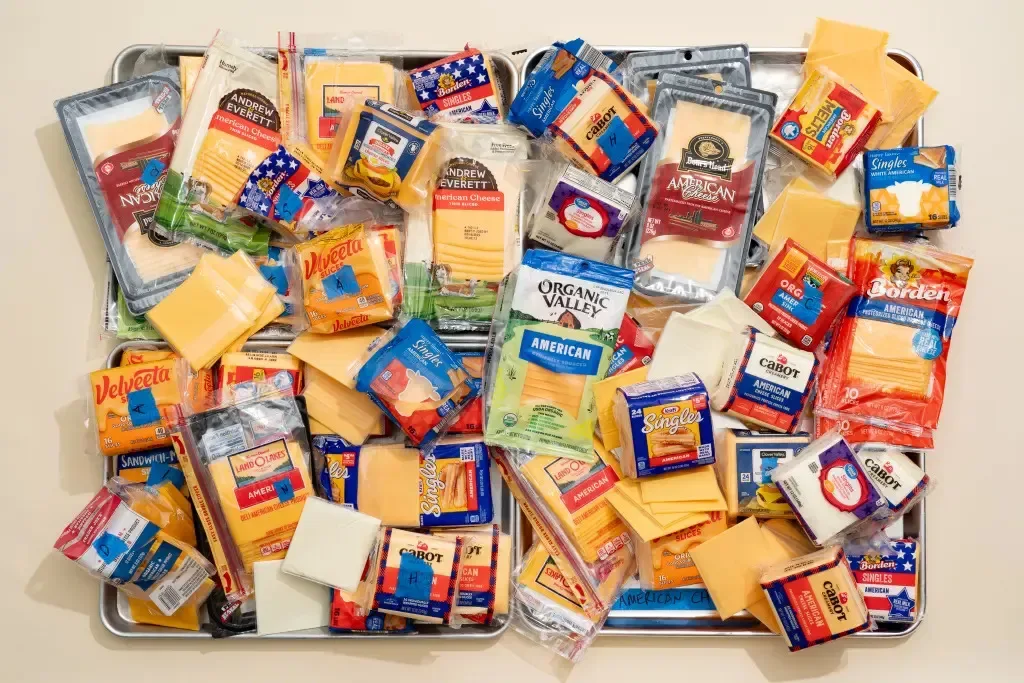
Firstly, it is important to highlight that cheeses in the USA are quite different from those found in Brazil. Furthermore, many are sold already sliced, grated or in blocks, which can facilitate everyday consumption. However, the wide variety of types can confuse those who are not used to them. Finally, here are some of the most common:
Types of cheese
- Cheddar – Unlike Brazilian creamy cheddar, in the USA it is firmer and, therefore, can vary between mild (mild) and aged (sharp or extra sharp).
- American Cheese – Widely used in burgers, it has a processed texture and mild flavor, that is, it is similar to cheese.
- Mozzarella – Sold in slices, grated or in blocks, similar to Brazilian mozzarella.
- Provolone – It can be mild or smoked and is therefore great for sandwiches.
- Swiss Cheese – Swiss cheese with holes, smooth and slightly sweet flavor.
- Colby Jack – Mix of Colby and Monterey Jack cheeses, widely consumed in snacks.
- Parmesan (Parmigiano-Reggiano) – Authentic Italian parmesan and industrialized "parmesan" are very different. The industrialized one is drier and, therefore, may contain many preservatives.
Tip: If you are looking for a cheese similar to Minas cheese, a good alternative could be queso fresco (Mexican), or farmer cheese.
Creams and Butters
- Half & Half – Mixture of milk and cream, often used in coffee.
- Heavy Cream – Heavy cream with a higher fat content, ideal for sauces and whipped cream.
- Sour Cream – Sour cream, widely used in American and Mexican cuisine.
- Cream Cheese – Very similar to Brazilian cream cheese, but with a firmer texture.
- Butter – Some come without salt (unsalted) and others with salt (salted). Be careful not to confuse it with "margarine", which is margarine.
Yogurts and Dairy Drinks
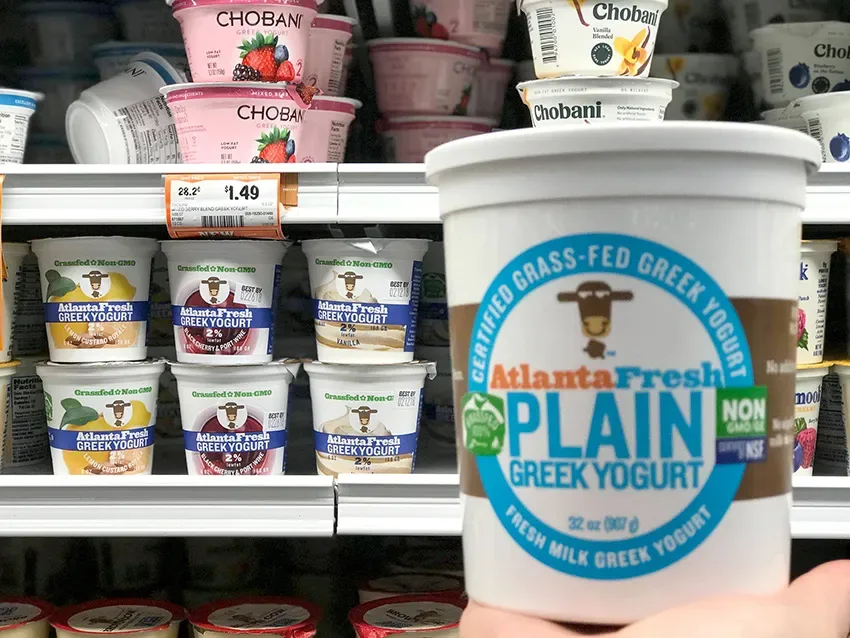
- Greek Yogurt – Greek yogurt, thicker and more protein. Some versions have a lot of sugar, so it's worth checking the labels.
- Plain Yogurt – Natural yogurt, without sugar or added flavors.
- Flavored Yogurt – Sweetened yogurts with artificial flavors.
Tip: If you are looking for a more natural yogurt, choose versions with "Plain" in the name and without added sugar (No Sugar Added).
Flour and Sugar
The types of flour and sugar in the USA may be slightly different from those in Brazil.
- All-Purpose Flour – Equivalent to common Brazilian wheat flour.
- Self-Rising Flour – Flour already mixed with chemical yeast.
- Whole Wheat Flour – Whole wheat flour.
- Cornmeal – Corn flour, which can be fine or coarse.
- Powdered Sugar – Icing sugar.
- Brown Sugar – Brown sugar, generally moister than Brazilian sugar.
Tip: If you need yeast, look for Baking Powder (chemical yeast) or Baking Soda (sodium bicarbonate).
Sweeteners and Syrups
- Maple Syrup – Maple syrup, often used with pancakes.
- Corn Syrup – Corn syrup, common in American sweets.
- Honey – Natural honey.
- Stevia, Erythritol, Monk Fruit – Natural sweeteners.
Tip: If you want a natural syrup, choose "100% Pure Maple Syrup" and avoid artificial ones like "Pancake Syrup", which are made from corn syrup.
Grains and Pasta
- Rice – White rice can be found as "White Rice" (long grain) or "Short-Grain Rice" (short, stickier grains).
- Brown Rice – Brown rice.
- Instant Rice – Pre-cooked rice, like parboiled rice.
- Oats (Oatmeal) – Oats can be "Rolled Oats" (rolled), "Steel-Cut Oats" (cut grains) or "Instant Oats" (quick).
- Pasta – Pasta in the USA is generally made from durum wheat (Durum Wheat) and comes in formats such as Spaghetti, Penne, Fusilli, etc.
- Mac & Cheese – Ready-made packets of macaroni and cheese, very popular in the USA.
Oils and Fats
- Vegetable Oil – Vegetable oil, usually a mixture of soybean, canola or corn oils.
- Canola Oil – Canola oil.
- Olive Oil – Olive oil. Extra virgin appears as "Extra Virgin Olive Oil".
- Coconut Oil – Coconut oil.
- Shortening – Solid vegetable fat, widely used in American confectionery.
Tip: If you are looking for healthier options, choose "Extra Virgin Olive Oil" or "Avocado Oil" (avocado oil).
Seasonings and Sauces
In the USA, the seasonings and sauces are a little different from what we are used to in Brazil.
- Salt – Common salt. If it is marine, it will come as "Sea Salt".
- Pepper – Black Pepper.
- Garlic Powder / Onion Powder – Garlic and onion powder, used in many dishes.
- Paprika – It can be "Sweet Paprika" (sweet) or "Smoked Paprika" (smoked).
- Hot Sauce – Hot sauce, such as Tabasco or Sriracha.
- BBQ Sauce – Barbecue sauce, very popular for barbecues.
- Ranch Dressing – Creamy dressing often used in salads and as a side dish.
Tip: If you are looking for a mayonnaise-type sauce, you can find it like "Mayonnaise" or the "Ranch" sauce, which has a slightly different flavor.
Now that you know how to identify and choose these products in American markets, your shopping in Orlando will be much easier! So, with this knowledge, you avoid buying the wrong products and can still try different options without fear. However, always remember to check the labels and choose what best suits your taste and needs!
Sources consulted:
- United States Department of Agriculture (USDA) – www.usda.gov
- The USDA regulates the classification of eggs (Grade AA, A and B) and determines quality standards.
- Food and Drug Administration (FDA) – www.fda.gov
- The FDA establishes rules on egg storage and the mandatory washing process in the US.
- Egg Safety Center – www.eggsafety.org
- Explains why eggs in the US are refrigerated and provides information on food safety.
- American Egg Board – www.incredibleegg.org
- Provides details about the different types of eggs sold in American supermarkets.
- Websites of major supermarket chains (Walmart, Publix, Whole Foods, Kroger)
- Some chains provide detailed descriptions of the products, including the differences between conventional, organic and enriched eggs.
Read also:


